
Last updated November 18, 2026




Free written scope consultation - allowances, timeline, and change-order rules on paper before a single trade is scheduled
How to Hire a Construction Contractor in El Monte: A Step-by-Step Guide
Most hiring guides tell you to collect three bids and pick the middle one. That advice sounds balanced, but it hides the real variable. In a mid-sized contractor market like El Monte’s, the lowest bid often reflects a subcontractor-heavy model where no single person is permanently accountable for the finished product. The spread between quotes usually isn’t materials or labor rates; it’s a difference in who shows up every day and who owns the outcome when something goes wrong. This guide walks you through the actual decision: how to read a license, verify insurance, structure a payment schedule, and write a scope of work that holds up when change orders start flying. We’ll show you how hiring works in El Monte specifically, from the CSLB database to the way permits move through the city.
Quick Answer
To hire a construction contractor in El Monte, verify their California license on the CSLB website, confirm active general liability and workers’ compensation coverage by calling the insurer directly, get a written scope of work with a payment schedule tied to milestones, and never pay more than 10% down or $1,000 (whichever is less) before work begins. The contractor who can answer detailed questions about who will be on-site daily and how change orders are handled is usually the safer choice, even if their bid isn’t the lowest.
Styles & brands we work with
- Kitchen remodeling
- Bathroom remodeling
- Home additions & ADU
- Roofing
- Windows & doors
- Driveway & pavers
- Fence
Table of Contents
- How do you verify a contractor’s license in El Monte?
- What insurance documents should you request, and how do you confirm them?
- What should a payment schedule look like in California?
- How do you structure a scope of work to prevent change-order inflation?
- How do you find out who will actually be on-site every day?
- How do permits work for construction projects in El Monte?
- How should you compare bids from different contractors?
- What should happen at the final walkthrough and closeout?
How do you verify a contractor’s license in El Monte?
You verify a California contractor’s license by looking up the license number on the Contractors State License Board (CSLB) website. The lookup takes under three minutes and tells you whether the license is active, what classifications it carries, whether there are any disciplinary actions on record, and whether the license bond and workers’ compensation coverage are current. If a contractor can’t give you a license number on the spot, that’s your answer.
License classifications matter because they define what work a contractor is legally allowed to perform. A general building contractor (B) classification covers projects that involve two or more unrelated trades, which most kitchen remodels, additions, and ADU projects do. A specialty classification (C-series) covers a single trade like roofing, fencing, or concrete. If you hire someone with only a C-39 roofing license to build your ADU, they’re operating outside their classification, and that creates problems when the city inspects the work.
Here’s what to check on the CSLB record:
- License status – active, expired, suspended, or revoked. Only “active” is acceptable.
- Classification – B for full-scope residential work, C-series for single-trade work.
- Bond – a current contractor’s bond should show as active.
- Workers’ comp – either a policy on file or a valid exemption if the contractor has no employees.
- Disciplinary actions – any citations, suspensions, or arbitration awards appear on the record.
If the project touches multiple trades (say, a kitchen remodel that involves cabinetry, countertops, plumbing fixtures, and electrical), you want a B-licensed contractor or a licensed general contractor who can pull the right permits for the whole scope. On a project like home additions & ADU, classification is the first thing to confirm.
What insurance documents should you request, and how do you confirm them?
Ask for two things: a certificate of general liability insurance and a certificate of workers’ compensation insurance. Then do what almost no homeowner does – call the insurer listed on each certificate and ask whether the policy is active and the contractor’s name matches. Certificates can be forged, and even when they’re real, they can be cancelled the next day. A phone call to the insurer takes about five minutes and confirms that the coverage you’re relying on actually exists.
General liability covers damage to your property or a third party’s property during construction. Workers’ comp covers injuries to anyone working on the job. That second one matters more than most homeowners realize. In California, if an uninsured worker is hurt on your property and their employer has no workers’ comp, the injury can come back to you through your homeowner’s policy or through a claim. And on a project where multiple trades are working at once – framing, roofing, plumbing, electrical – the odds of a workers’ comp claim are far from zero.
Here’s the checklist we recommend:
- Ask for both certificates by email before signing anything.
- Confirm the contractor’s legal name matches the name on the CSLB license.
- Call the insurer listed on the certificate and ask whether the policy is currently in force.
- Ask for the policy’s expiration date and check that it extends past your project’s expected end date.
- Ask whether subcontractors carry their own coverage or are covered under the general contractor’s policy.
If a contractor pushes back on any of these requests, that pushback itself is useful information. Every legitimate contractor expects to be asked.
What should a payment schedule look like in California?
California law limits the down payment a contractor can collect before starting work to 10% of the contract price or $1,000, whichever is less. That number exists for a reason: it keeps a contractor from financing their business on your deposit. A schedule that asks for 30% or 40% up front, or for the majority of the money before materials arrive on-site, is the single most reliable early warning sign of a contractor in cash flow trouble.
Here’s what a defensible payment schedule looks like for a typical El Monte home improvement project:
- Deposit – 10% or $1,000, whichever is less, due at signing.
- Progress payment 1 – tied to a defined milestone, such as demolition complete or framing inspected.
- Progress payment 2 – tied to a second milestone, such as rough-in plumbing and electrical complete.
- Progress payment 3 – tied to a third milestone, such as drywall complete and finishes installed.
- Final payment – 10% to 15% held until the final walkthrough and any punch-list items are complete.
The key principle is that payments follow work, not the calendar. A schedule that says “30% due on May 1” regardless of what’s actually been built is not a milestone schedule, it’s a financing arrangement. Ask for the schedule in writing and confirm that each payment is tied to a specific, verifiable phase. This holds true whether you’re buying a driveway & pavers install or a full bathroom remodel.
A useful test: if the job stopped tomorrow, would the money you’ve paid out be roughly matched by the work that’s been done? If not, the schedule is front-loaded, and you’re carrying the contractor’s risk.
How do you structure a scope of work to prevent change-order inflation?
A scope of work is a written document that describes exactly what will be built, with what materials, at what dimensions, and at what price. The more specific it is, the harder it is for change orders to inflate the final invoice. A contractor’s standard scope of work is often a single page with a handful of bullet points; that’s a proposal, not a scope. Ask for a document that names every material and brand the project will use.
Why brand specificity matters: “mid-grade countertop” is a placeholder, “Cambria or Silestone quartz” is a specification. “Standard cabinet” is a placeholder, “KraftMaid or Wellborn cabinetry” is a specification. When a contractor has to swap a placeholder for an actual material, the change order process becomes an open season on your budget. When brands and models are named in the original scope, there’s nothing to change later.
Here’s what we recommend every scope of work include:
- Dimensions and quantities – linear feet of fence, square feet of pavers, number of windows, cubic feet of concrete.
- Brand and model names – every named material, down to finish and color category.
- Explicit exclusions – what is NOT included, listed separately.
- Change-order procedure – a written approval process with a signed change order before any additional work begins.
- Schedule – start date, milestone dates, and a defined completion window.
- Site protection and cleanup – who protects what, and who hauls away debris.
- Warranty terms – workmanship warranty length and manufacturer warranty coverage.
The change-order clause is the one that saves budgets. A good clause says: no additional work begins until a written change order is signed by both the homeowner and the contractor, and the change order states the additional cost and the schedule impact. On a fence installation, a change order for a few extra posts can be a reasonable $200; without a defined procedure, that same extra work can be presented as a $1,200 line item.
How do you find out who will actually be on-site every day?
The single most important question to ask is: who will be on-site every day, and will that person be the one you’re meeting right now? If the answer is vague, “our crew” or “our project manager,” you’ve learned that your job is being handed off. The person you meet during the bid process is often a salesperson or a supervisor whose role ends when the contract is signed. What happens after that is a different team entirely.
A subcontractor-heavy model isn’t inherently bad; most full-scope projects involve some specialty trades. But the difference between a well-run sub model and a fragmented one is accountability. In the well-run version, a single person is on-site daily, coordinating every sub, checking work, and answering your questions. In the fragmented version, subs are scheduled independently, no one is coordinating their sequences, and when a mistake happens, each sub points to the other.
Ask these questions during the bid walkthrough:
- Who will be my primary point of contact during construction?
- Will that person be on-site every day, or do they manage multiple jobs at once?
- Which trades are handled by your own team and which are subcontracted?
- How do you schedule subcontractors to avoid gaps between trades?
- What’s the process if a sub’s work is defective or doesn’t match the scope?
The answers will reveal the model. A contractor who can describe exactly how they sequence trades and who they send out for each phase is managing accountability. A contractor who says “don’t worry, it’ll be handled” is not. Our own model reflects this: seven trade categories – driveways and pavers, fences, additions and ADUs, bathrooms, windows and doors, roofing, and kitchens – handled by one accountable team so there’s no coordination gap between vendors. That’s what Construction El Monte was built around.
How do permits work for construction projects in El Monte?
Most construction projects in El Monte require a permit from the city’s building department, and the permit must be pulled by a licensed contractor in the correct classification. Permits generally apply to structural work, additions, ADUs, roofing replacements, electrical and plumbing changes, and most projects that alter the building envelope. Cosmetic work like paint, cabinet replacement in the same footprint, and flooring usually does not require a permit.
Ask your contractor directly: “Will you pull the permit, and can you show me the permit number before work begins?” A contractor who asks you to pull the permit as the homeowner is shifting a legal responsibility onto you, and that often means their license or classification won’t support the work. A contractor who says “we don’t need a permit for that” without explaining why should be asked to explain in writing.
The permit process typically looks like this:
- Contractor submits drawings and application to the El Monte building department.
- Plan check reviews the drawings (timelines vary by project complexity).
- Permit is issued, and construction can begin.
- Inspections are scheduled at defined phases (framing, rough-in, final).
- Final inspection is passed, and the permit is closed.
Permits matter beyond compliance. Unpermitted work creates a disclosure problem when you sell the home, and it can be flagged during a buyer’s inspection. On projects like an ADU or home addition, unpermitted square footage doesn’t legally count as living space. Ask for the permit number, keep it in your records, and confirm the final inspection has been signed off before making your last payment.
How should you compare bids from different contractors?
Compare bids by normalizing them to the same scope, not by comparing the bottom-line number. A $38,000 spread between three bids for a driveway and ADU project isn’t unusual, and it usually means the three contractors are pricing three genuinely different scopes. One bid names every brand and material; another leaves categories vague. One includes permits and inspections; another doesn’t. Before comparing the totals, build a comparison grid.
The grid looks like this:
- Scope match – does each bid include the same dimensions, quantities, and materials?
- Brand specificity – does each bid name brands, or leave placeholders?
- Permit responsibility – is pulling the permit included in the price?
- Warranty – what’s covered by workmanship warranty, and what’s covered by manufacturer warranty?
- Payment terms – what’s the deposit, and how are milestones structured?
- Change-order procedure – what’s the process, and is it in writing?
- Timeline – what’s the start date and completion window?
Once the grid is filled in, the picture usually changes. A bid that was 15% higher than the lowest often turns out to be the actual same-scope comparison, because the lowest bid left out permits, named a placeholder for the countertop, and front-loaded the payment schedule. The point isn’t that the highest bid is automatically best; the point is that the lowest bid is only meaningful if it’s priced against the same scope.
We spec brand-name materials on every project for exactly this reason: GAF, CertainTeed or Owens Corning on roofing, Belgard, Unilock or Techo-Bloc on hardscape, KraftMaid or Wellborn cabinetry, Cambria or Silestone countertops, Kohler or Grohe fixtures. Brands carry published warranties homeowners can independently verify, which gives you a way to check the bid’s claimed material quality against the actual product spec.
What should happen at the final walkthrough and closeout?
The final walkthrough is a documented inspection of the completed work against the signed scope of work. You and the contractor walk the project together, check every item on the scope, note deficiencies, and agree to a punch list of items to be corrected. Do not make the final payment until the punch list is resolved and the final inspection has been signed off by the city.
The closeout package should include:
- The final signed inspection card from the city, showing the permit was closed.
- Manufacturer warranty documentation for every branded material.
- The contractor’s written workmanship warranty, with length and coverage terms.
- The punch list, with completion dates for each item.
- Final invoice matching the original contract price (plus paid change orders).
If any item is missing – a warranty certificate, a signed inspection card, a punch list – that’s your leverage. The final payment is your last source of recourse. Hold the last 10% to 15% until the full closeout package is delivered.
Common Mistakes to Avoid
- Paying more than 10% down. California law caps the down payment, and a contractor asking for 30% or more up front is telling you something about their cash flow. That’s a risk you shouldn’t take on.
- Accepting a certificate without calling the insurer. A certificate proves nothing unless you confirm the policy is active. Five minutes on the phone with the insurer is the difference between real coverage and a piece of paper.
- Comparing bids on price alone. A bid that’s $15,000 lower is often a bid with a smaller scope, fewer named materials, or no permits. Normalize before you decide.
- Skipping the CSLB lookup. A contractor with a suspended license, an expired bond, or a C-classification that doesn’t cover the work is a legal liability. Check the license before signing.
- Accepting a one-page “scope of work.” Vague scope language is the loophole that turns a $40,000 kitchen into a $55,000 invoice. Insist on brand names, dimensions, and a written change-order procedure.
- Assuming the person you meet will be on-site. Ask directly who will be on-site every day, and how subcontractors are coordinated. The answer tells you what kind of project you’re going to get.
- Releasing the final payment before closeout. The last 10% to 15% is your leverage. Hold it until the punch list is done, the permits are closed, and the warranty paperwork is in hand.
See the difference
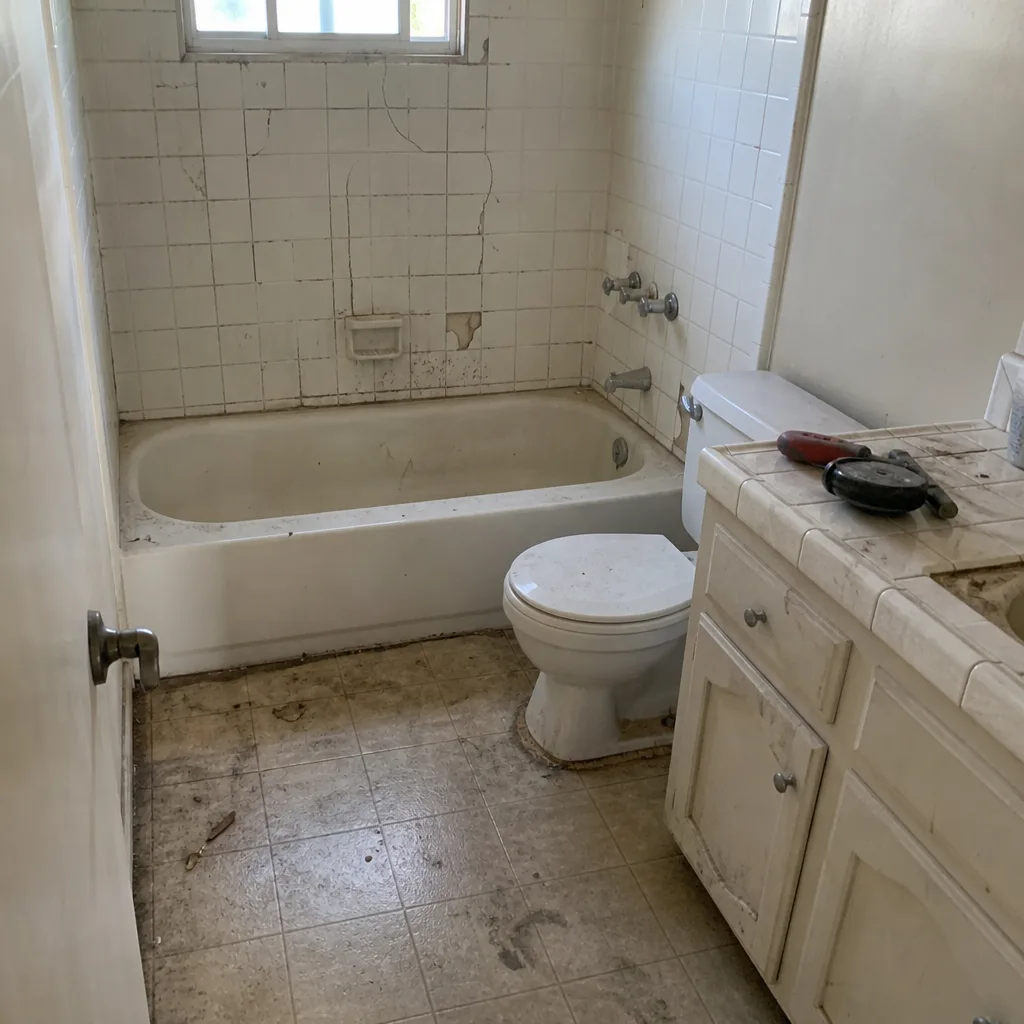 Before
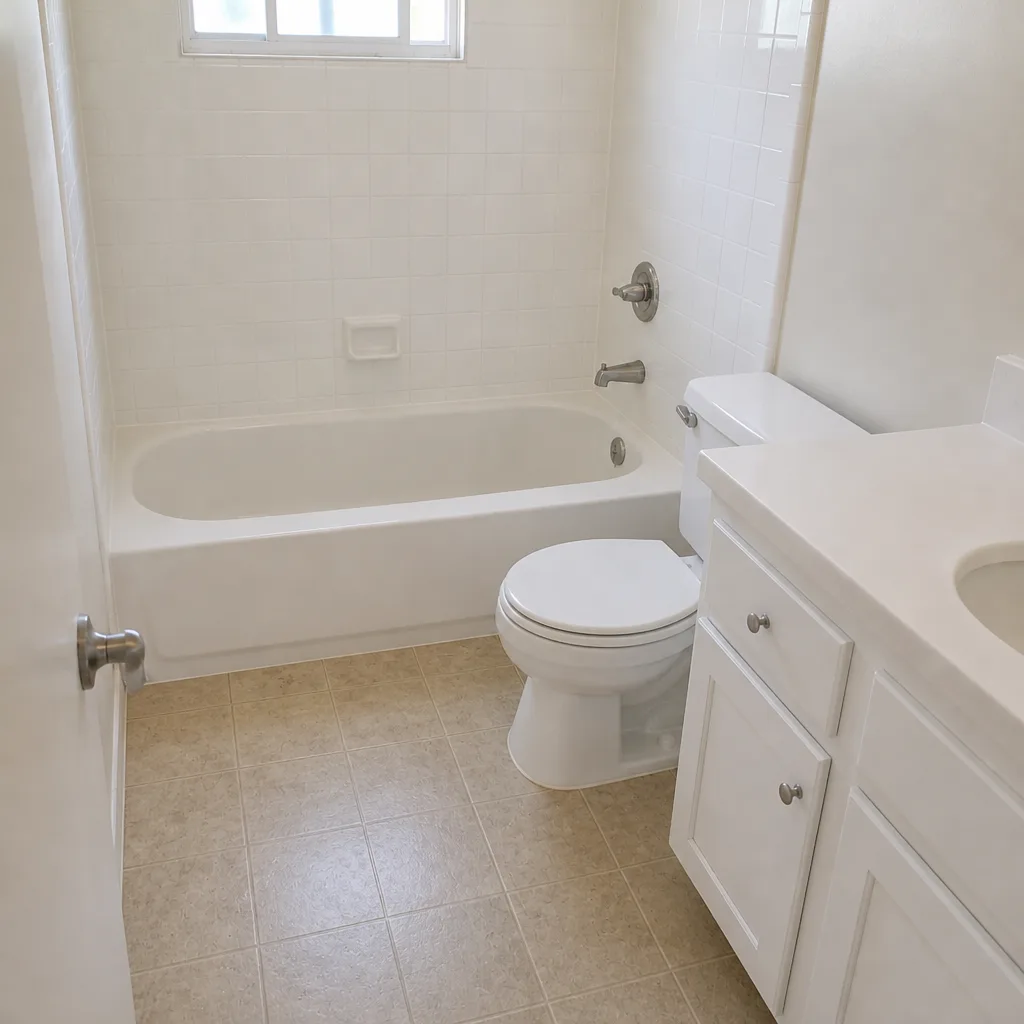 After
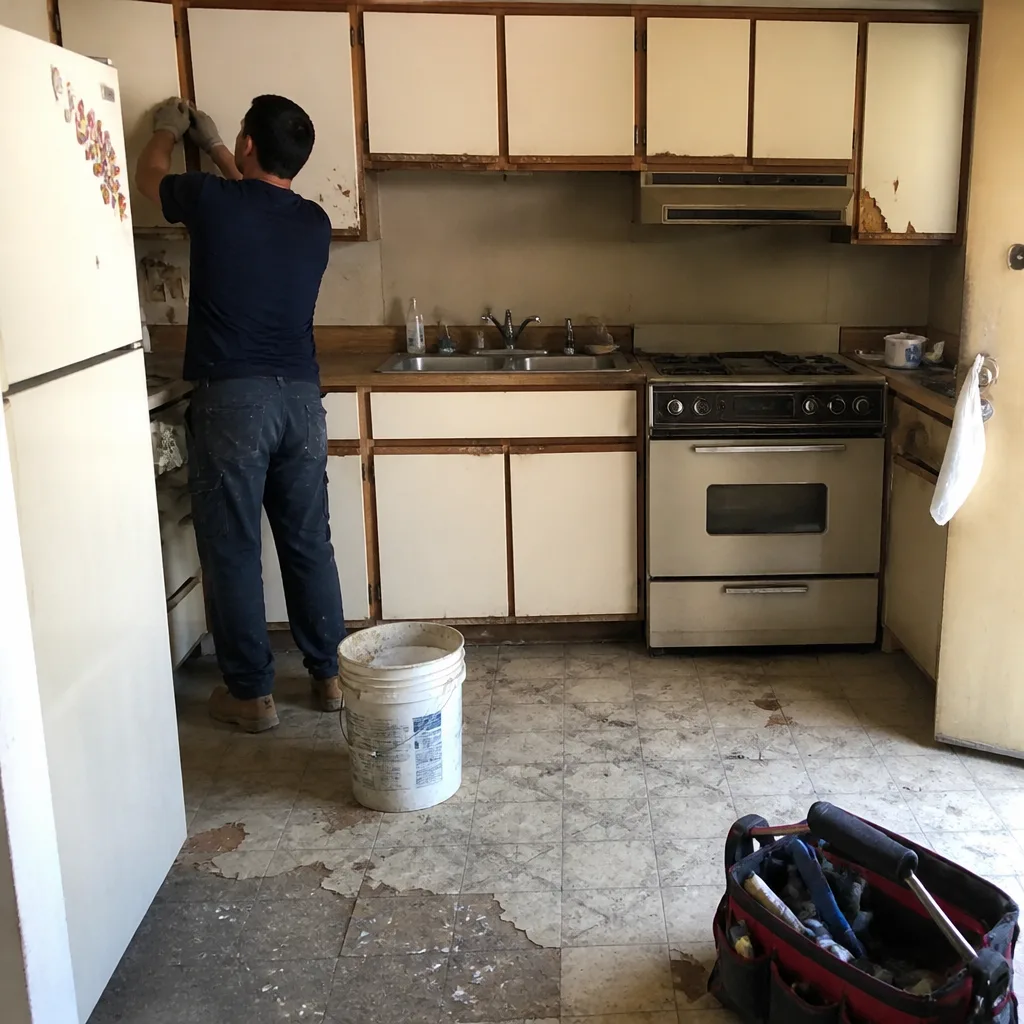 Before
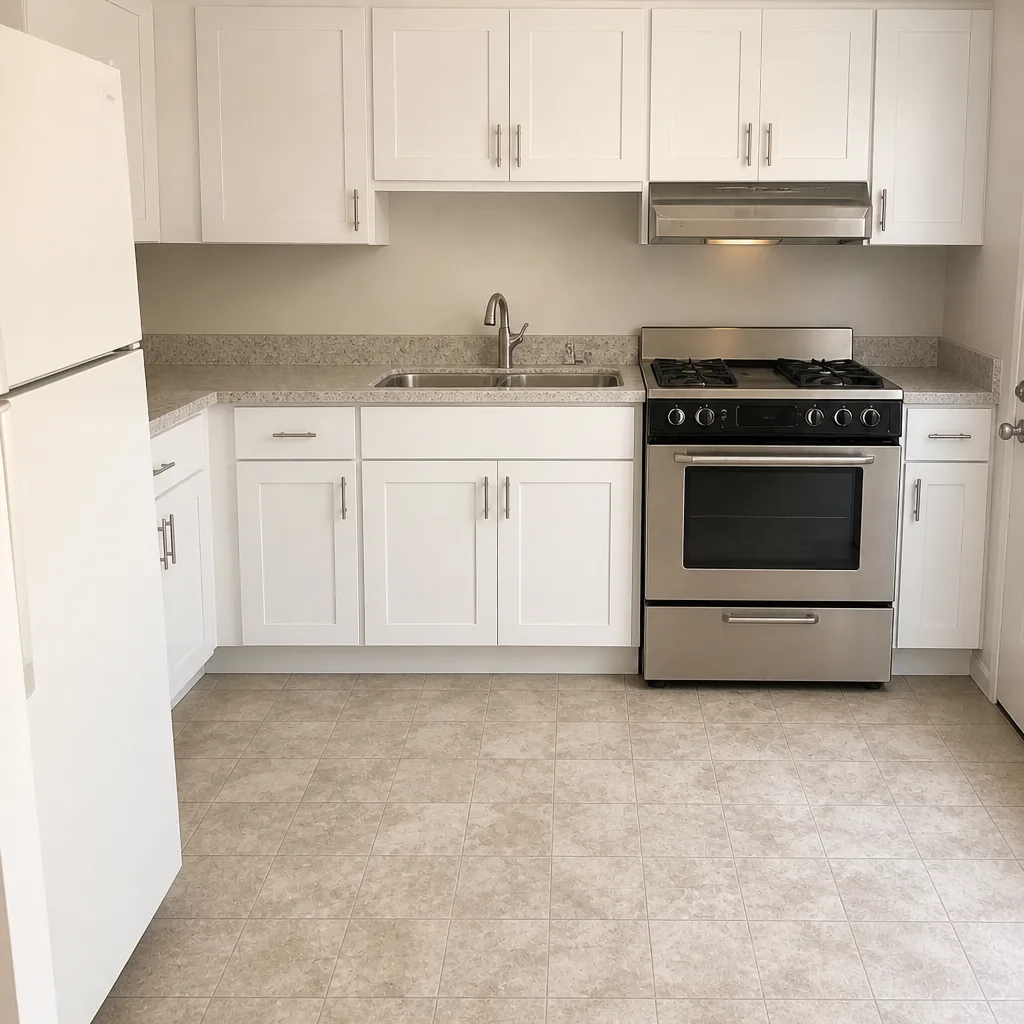 After
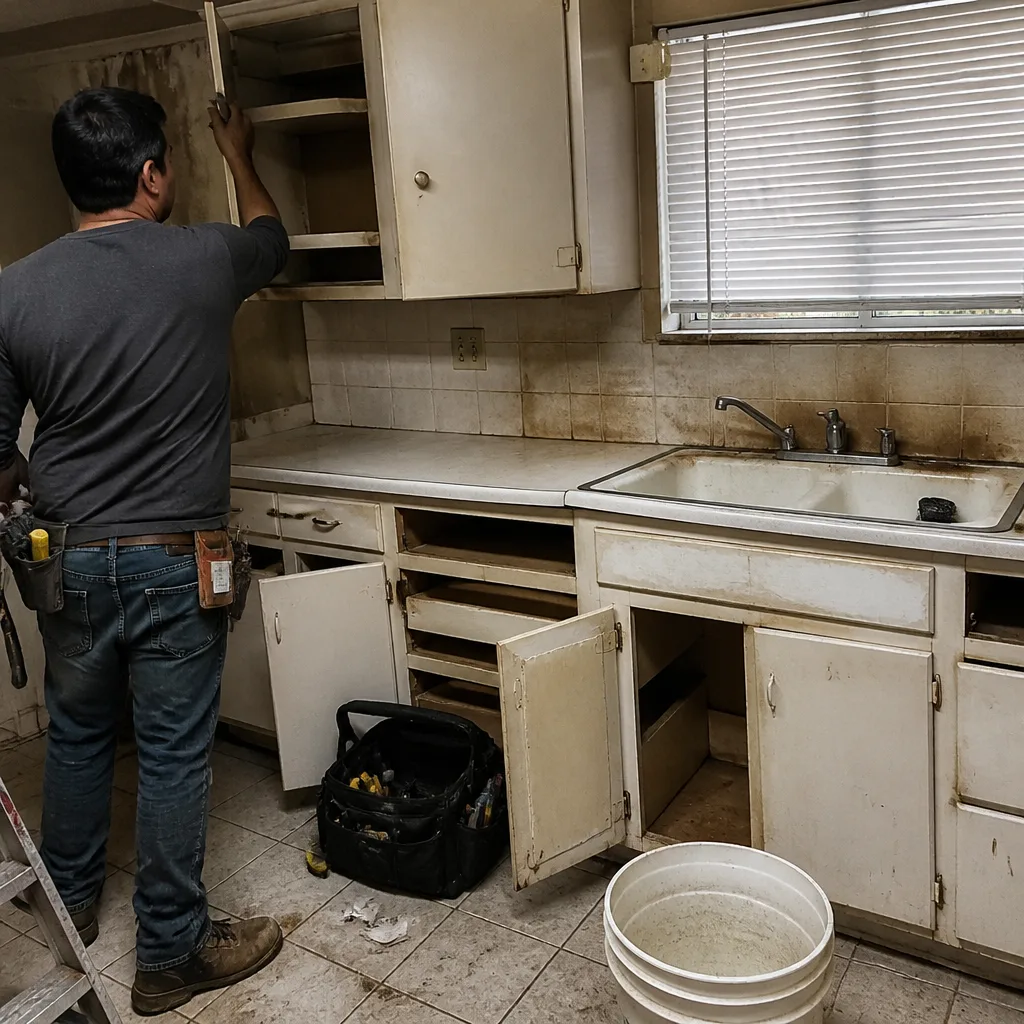 Before
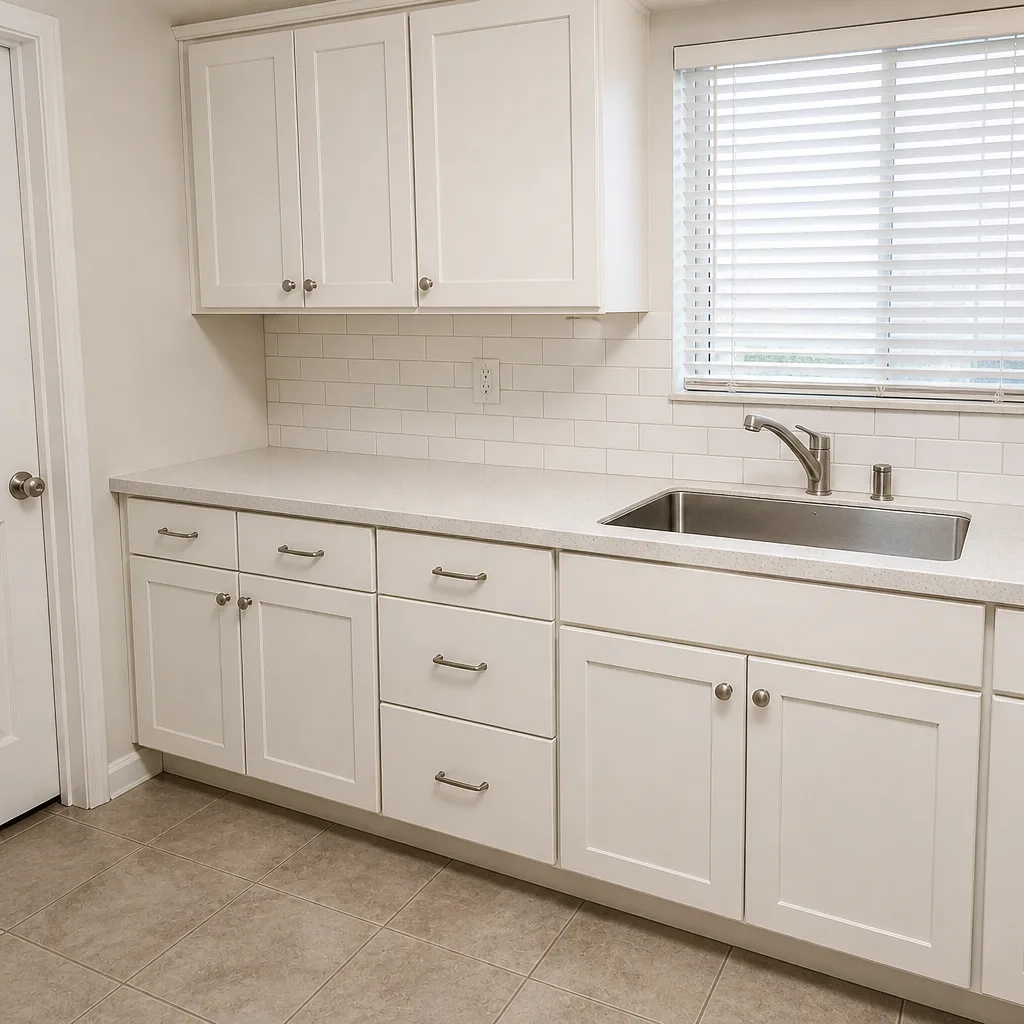 After
When to Call a Professional
Call a licensed contractor when the project involves structural changes, electrical or plumbing work, roofing, major exterior work, or anything that requires a permit. If your project touches more than one trade – a bathroom remodel that pulls in plumbing, tile, electrical, and cabinetry, or a kitchen remodel that moves plumbing fixtures – you’re in the range where a full-scope contractor saves you from the coordination problem. Call a professional contractor anytime the job risks a permit violation, a warranty void, or a safety concern that a homeowner can’t reasonably assess. Construction El Monte offers free estimates in El Monte. Call (844) 320-2624. We answer 24/7. Fast dispatch from 7am to 7pm, Sunday through Friday.
Frequently Asked Questions

Look up the license number on the CSLB website (cslb.ca.gov). The record shows license status, classification, bond status, workers’ comp, and any disciplinary actions. If the contractor can’t or won’t give you a license number, that’s a red flag: licensed contractors provide it without hesitation.
California law caps the down payment at 10% of the contract price or $1,000, whichever is less. A contractor asking for more than that before work begins is asking you to fund their operation. The safest structure ties every payment after the deposit to a verifiable milestone, with a final payment of 10% to 15% held until closeout.
Most structural, electrical, plumbing, and roofing work in El Monte requires a permit, and the permit should be pulled by the licensed contractor performing the work. Ask for the permit number before work starts, and confirm the final inspection is signed off before making your last payment. If a contractor tells you to pull the permit yourself, that usually means their license won’t support the work.
Ask directly who will be on-site every day and whether that person is the same one at the bid walkthrough. Then ask which trades are handled in-house and which are subcontracted. A contractor who can describe how they sequence subs and who coordinates them is managing accountability; a contractor who waves off the question is not.
Named brands are the difference between a spec and a placeholder. On roofing, look for GAF, CertainTeed, or Owens Corning. On hardscape, Belgard, Unilock, or Techo-Bloc. On cabinetry, KraftMaid or Wellborn. On countertops, Cambria, Silestone, or Caesarstone. These brands carry published manufacturer warranties, which means you can verify what the bid is promising.
Timelines vary widely by scope. A driveway or fence replacement usually completes in days; a bathroom remodel in weeks; a kitchen remodel or home addition in months; an ADU in four to eight months depending on the method (prefab units are faster than site-built). Your written scope of work should state a start date and a completion window, and the change-order procedure should address schedule impact.
The Bottom Line
Hiring a construction contractor in El Monte comes down to structure, not price. The lowest bid often reflects a subcontractor-heavy model with no single point of accountability, and the difference shows up months later in change orders, delays, and warranty gaps. Do the three-minute CSLB lookup. Call the insurer directly. Cap your deposit at 10% or $1,000, whichever is less. Get every material named by brand in the written scope. Ask who will be on-site every day. These steps take a few hours, and they’re the difference between a project that runs smoothly and one that costs you 20% more than the original bid. If you want the process to start with a written estimate that names materials, brands, and payment milestones, call us. Construction El Monte provides free estimates on every project, and our technicians have up to 13 years of experience across roofing, kitchen and bath remodeling, driveways, fences, windows and doors, and additions and ADUs.
Call (844) 320-2624. We answer 24/7. Fast dispatch from 7am to 7pm, Sunday through Friday.
Written by the team at Construction El Monte.