Last updated November 18, 2026
Free written scope consultation - allowances, timeline, and change-order rules on paper before a single trade is scheduled
The Complete Driveway & Pavers Guide for El Monte Homeowners
Most driveway paver failures in the San Gabriel Valley start six inches underground, not at the surface. The paver brand rarely matters if the compacted base wasn’t built for expansive soil. El Monte sits on clay that swells when it drinks and shrinks when it dries, and a driveway poured or set over that ground without the right preparation will crack, heave, or settle no matter how expensive the surface material was. This guide treats the ground beneath your driveway as the real project. You’ll learn how deep the base needs to go by soil type, how the major paver materials hold up under 100°F+ summers, where drainage has to flow on El Monte’s flat grid streets, when the city requires a permit, and how to read the specs on a paver box so the numbers actually mean something for your lot.
Quick Answer
A driveway paver project in El Monte typically runs $12-$30 per square foot installed, and the base preparation matters far more than the paver color or brand you choose. On the clay-heavy soil common to San Gabriel Valley lots, a properly built base needs to be deeper than the Southern California average, with drainage graded away from the slab or foundation. The written estimate sets the final price, and it should break out excavation, base depth, and surface material as separate line items so you can see what you’re paying for.
Styles & brands we work with
- Kitchen remodeling
- Bathroom remodeling
- Home additions & ADU
- Roofing
- Windows & doors
- Driveway & pavers
- Fence
Table of Contents
- Why El Monte’s Clay Soil Changes Everything
- How Deep Does the Base Need to Be? Depth by Soil Type
- Concrete Pavers vs. Natural Stone vs. Permeable Pavers
- Slope, Drainage and Pooling on Flat El Monte Streets
- The Permit Reality: When El Monte Requires a Driveway Permit
- How to Read PSI and Freeze-Thaw Ratings
- What Does a Paver Driveway Cost in El Monte?
- How a Typical Paver Driveway Project Goes
Why El Monte’s Clay Soil Changes Everything
The soil under much of El Monte is expansive clay, the kind that holds water and moves with the seasons. In summer, when the ground dries out for weeks, that clay contracts. When the winter rains arrive, it swells back. The ground under a driveway in El Monte is moving whether you see it or not. A paver driveway built over an inadequately compacted base becomes a surface riding on a slow-moving foundation, and the failure shows up as dips, rocking pavers, joints that open up, or a slab that cracks along a line the installer never planned for.
This is where El Monte differs from hillside communities like Altadena or Sierra Madre, where the soil is often decomposed granite and rock. Those lots drain fast and move little. Flat valley lots in El Monte hold water longer, and the clay content keeps it there. That means a paver driveway on a typical El Monte lot has a base preparation job that goes deeper and deserves more attention than what a generic installation guide from a coastal or mountain market will tell you.
What the right base looks like on your property depends on a few things:
- Soil classification. A soil test or a visual inspection during excavation tells you whether you’re over expansive clay or a sandier pocket. That distinction changes the depth of the compacted base.
- Existing drainage. Where water currently flows across the lot tells you where it will try to flow through the new driveway.
- Tree roots. Mature trees in El Monte lots send roots under driveways, and their movement with the clay can lift pavers.
- Prior concrete or fill. Old driveways and buried fill behave differently than undisturbed soil, and the base depth needs to account for what’s underneath.
The cost of getting this right is minor compared to replacing a driveway that failed because the base was too shallow. When you’re comparing bids on a paver driveway, the line that says “base material and compaction” should be specific. If a bid glosses over that line, that’s the bid you should question. Construction El Monte provides driveway & pavers work with the base called out as its own line, so you can see exactly what the price covers before work starts.
How Deep Does the Base Need to Be? Depth by Soil Type
A paver driveway base over expansive clay in El Monte typically needs to run deeper than the Southern California average, and some lots call for a stabilized or geotextile-reinforced layer beneath the compacted aggregate. The rule of thumb for a standard residential driveway is a compacted base of 4 to 6 inches over stable soil. On El Monte clay, that rises, and the exact depth depends on what’s under the pavers and how much traffic the driveway will carry.
Here’s how base depth tends to break down by soil type in this market:
- Expansive clay (common in El Monte): 8 to 12 inches of compacted aggregate, often built in lifts of 2 to 3 inches each and compacted between lifts. A geotextile fabric or a layer of stabilized base can help separate the clay from the aggregate and reduce movement.
- Mixed soil with sand content: 6 to 8 inches of compacted aggregate is the usual starting range, with compaction checked at each lift.
- Sandy or decomposed granite soil: 4 to 6 inches of compacted base can often work, but drainage still has to be planned.
- Over old concrete or fill: The base may need additional depth to bridge the transition, or the old slab has to come out.
Depth alone isn’t the whole story. Compaction is what turns loose aggregate into a base that holds a driveway in place. A 10-inch base that was dumped and smoothed but never compacted in lifts will settle the same way a 4-inch base would. When you review an estimate, look for the words “compacted in lifts” or “compaction checked between layers.” That’s how a paver contractor signals they understand the base is the actual job.
If you’re extending a driveway, adding a pad for an RV, or widening the approach to your garage, the same base rules apply. The material under the new section has to match or bridge to the existing driveway. Otherwise you get a joint along the seam that opens up within a couple of seasons. Construction El Monte’s technicians, with up to 13 years of experience, build driveways with that transition in mind, and the estimate calls out how the new section ties into the old one.
Concrete Pavers vs. Natural Stone vs. Permeable Pavers
For a Southern California driveway that sees 100°F+ summers and intense UV for months at a time, concrete pavers and natural stone both hold up well, while permeable pavers make sense where drainage is the main problem. The key differences come down to how each material handles heat, how it weathers, and how much maintenance it asks for.
Concrete Pavers
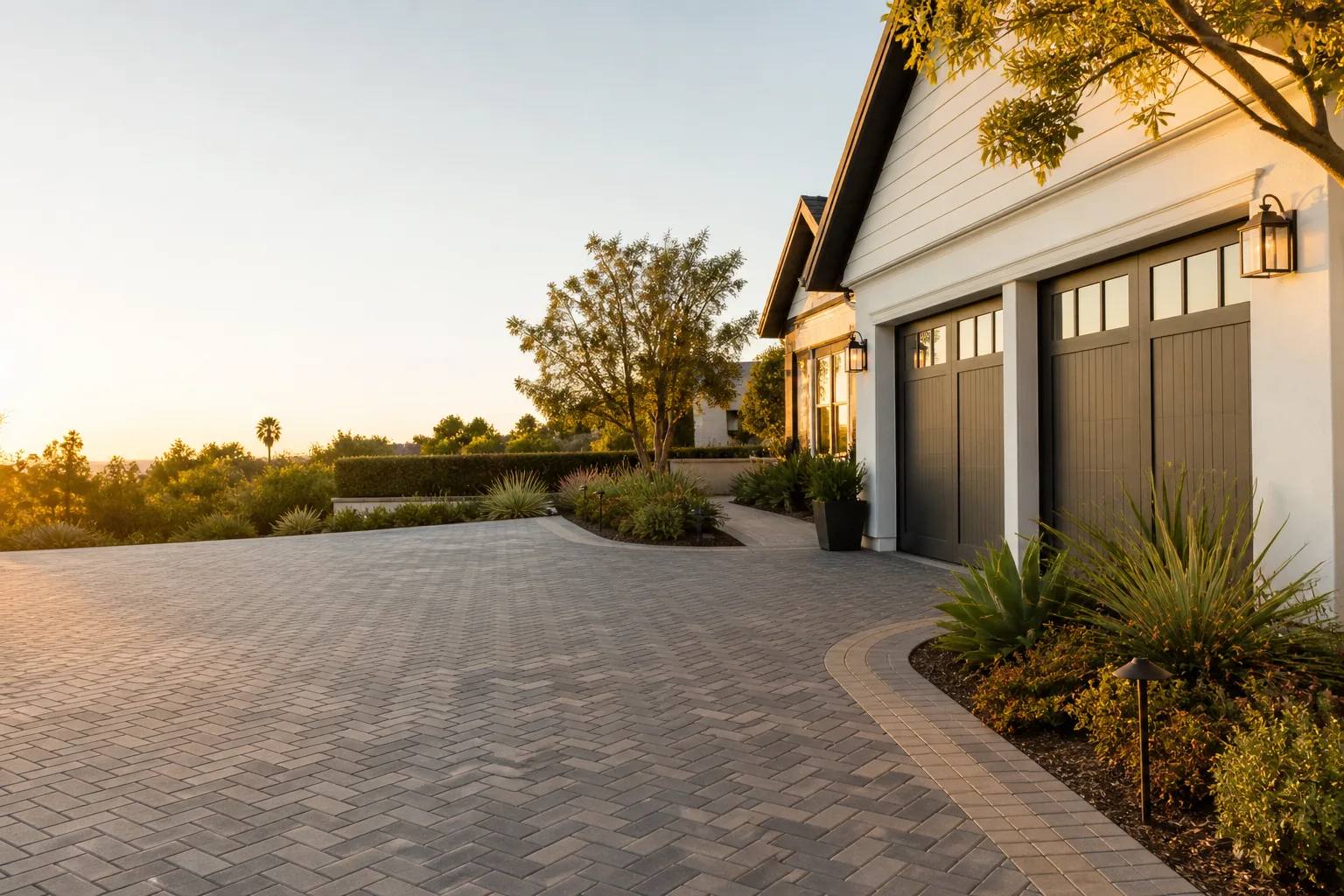
Concrete pavers are the most common choice for El Monte driveways and the most cost-effective at the entry price point. Brands like Belgard, Unilock, Techo-Bloc, and Cambridge Pavers make pavers in a wide range of colors and shapes, and each of those brands publishes product warranties the homeowner can research. In SoCal heat, a light-colored concrete paver stays cooler underfoot than a dark one, and lighter tones fade less visibly over years of UV exposure. The main trade-off is joint sand. Joints need re-sanding as the sand washes out over time, especially if there’s a slope draining across the surface.
Natural Stone
Natural stone, such as granite, sandstone, or travertine, has a look that engineered pavers can’t quite match, and it holds up to UV without fading. The downsides are cost and consistency. Natural stone is heavier, hard on the installer’s back, and prices climb fast when the stones need to be cut or thickness-sorted. Stone also varies in porosity. A tight-grained stone resists staining and water absorption. A softer, more porous stone takes sealant more often.
Permeable Pavers
Permeable pavers allow water to drain through the surface and into a stone reservoir below, which alleviates pooling. On El Monte’s clay soil, where water tends to sit on the surface, a permeable paver system can be genuinely useful – but only if the base is designed for water storage and the soil underneath can accept the water that drains through. A permeable system over tight clay without an underdrain or designed storage layer just holds water below the surface, which is worse than allowing it to run off. Permeable pavers also need periodic vacuuming or sweeping to keep the joint openings clear of debris.
How they compare
- Heat and UV: All three hold up to El Monte summers. Natural stone resists fading best. Light-colored concrete pavers stay coolest. Dark permeable pavers heat up more on exposed lots.
- Maintenance: Concrete pavers need occasional joint sand. Permeable pavers need surface cleaning to keep draining. Natural stone needs sealant every few years on softer stones.
- Repair: Concrete pavers are the easiest to lift and replace if a section fails. Natural stone is repairable but slower. Permeable systems are repairable if the base is still intact.
- Base demands: Permeable systems have the most specific base requirements. Natural stone needs a firm, even setting bed. Concrete pavers are the most forgiving but still require proper base compaction.
Construction El Monte installs all three, so the conversation can start with what your lot actually needs rather than what happens to be on a truck. If your project involves a wider driveway, an outdoor kitchen pad, or a walkway that ties into a new exterior layout, the same paver brands carry matching products for those areas, and the estimate can cover all of it as one scope. Homeowners planning larger lot improvements often pair paver work with fence installation so the materials and finished elevations line up.
Slope, Drainage and Pooling on Flat El Monte Streets
Drainage direction matters more on El Monte’s flat grid streets than it does on hillside lots, because on a slope, water leaves on its own. On a flat lot, it has nowhere to go except where the grade sends it. A driveway is a large impervious surface, and if the slope sends runoff toward the house, garage, or neighboring property, you’ll know it the first strong winter rain.
A properly graded El Monte driveway usually does three things:
- Slopes away from the house or garage. A subtle pitch of about 2% (roughly a quarter-inch per foot) directs water out to the street or to a drainage feature. It doesn’t need to be visible. It does need to be intentional.
- Handles water from the street side. On flat streets, water from the street can back up against the driveway apron during heavy storms. The apron grade has to either hold that water back or channel it through a drain.
- Avoids neighbor impacts. On tight lots, moving water off your driveway can push it onto the neighbor’s property. Grading that respects the property line and existing drainage patterns is part of the design.
Where a lot has no natural outlet, options include a channel drain at the low point, a dry well or drainage pit if the soil allows one, or permeable paver sections that hold and infiltrate water. The right answer depends on how much water is trying to move and where the property line sits. Getting drainage wrong shows up as paver settlement, staining, or a wet garage threshold after every rain, and correcting it after the fact is more expensive than designing for it up front.
In our experience, drainage is the most common thing an El Monte homeowner discovers after the fact when a driveway is installed without planning for it. It’s also the thing that gets left off a low bid because it’s invisible in the finished product until the first storm. Ask any contractor you interview how the project will drain, and ask them to describe it in the estimate.
The Permit Reality: When El Monte Requires a Driveway Permit
El Monte’s Building & Safety Division generally requires a permit when a driveway project changes the footprint, alters access to the street, or affects the public right-of-way – and a permit is often not required for a straight replacement of pavers over an existing driveway that doesn’t change anything. The line between those two cases is what trips up a lot of homeowners, so it’s worth being specific about what tends to trigger a permit.
What usually requires a permit or plan check:
- New driveway construction. Adding a driveway where none existed, or where the lot was previously landscaped or unpaved.
- Widening or changing the approach. A wider driveway changes how much curb is cut and where the apron meets the street, which typically means an encroachment permit along with the building permit.
- Changes to the street apron or curb cut. Any work in the public right-of-way almost always requires a permit and inspection, even if the driveway itself stays the same size.
- Grading changes that affect drainage. If the driveway redesign alters how water flows across the lot or to the street, plan check may look at drainage.
- Structural changes. Retaining walls above a certain height, or a driveway over a below-grade structure such as a garage or basement, will typically require engineered plans and a permit.
What usually does not require a permit:
- Replacing pavers or concrete in the same footprint with the same elevation and drainage.
- Sealing, joint sand replacement, or cleaning of an existing paver driveway.
- Repointing or replacing individual damaged pavers within an existing driveway.
That said, the exact answer for your property comes from El Monte Building & Safety, not from this guide or any contractor’s website. A quick call to the city before you sign an estimate confirms whether you need a permit, whether plan check applies, and what the inspection process will look like. When we scope a driveway project, permits get called out as their own line, and we pull them where they’re required so the inspection passes and the finished driveway is documented with the city.
Two things are worth knowing about the inspection step. First, paver driveway inspections typically happen in stages: base preparation before the pavers go down, and final after they’re set. If the base inspection isn’t on the schedule, work can get to a point where it has to be uncovered to pass. Second, the driveway from the apron back is a licensed contractor’s responsibility, but the apron itself and everything between it and the street often belongs to the public right-of-way and has its own permit. Keeping those two scopes straight avoids a surprise later.
How to Read PSI and Freeze-Thaw Ratings
Two numbers on a paver spec sheet matter in El Monte, and one of them doesn’t. Compressive strength, measured in PSI, tells you how much load a paver carries before it breaks. Freeze-thaw ratings tell you how many freeze-thaw cycles a paver can survive, and that number is irrelevant in El Monte’s mild-winter climate. The PSI is not.
Here’s what a homeowner should actually look at:
- Compressive strength (PSI): Standard concrete pavers for residential driveways typically run 3,000 to 5,000 PSI. Higher PSI handles heavier loads, such as an RV, a loaded truck, or regular delivery traffic. Standard passenger car traffic needs less, but the higher figure doesn’t hurt.
- Water absorption: A lower absorption rate means the paver resists staining and freeze damage better. In El Monte, that matters less for freezing and more for staining from tree tannins, oils, and irrigation water.
- Freeze-thaw rating: If your paver passes ASTM C67 or C936 freeze-thaw criteria, it means it will survive a certain number of freeze-thaw cycles. That matters in cold climates. It’s not a design consideration for El Monte. What matters here is UV stability, heat tolerance, and how the surface color holds up over years of sun.
- Abrasion resistance: Direct sun and dry conditions cause surface wear over time. Pavers rated for heavy abrasion hold up better.
Manufacturers like Belgard, Unilock, and Techo-Bloc publish spec sheets for each product they sell, and the numbers don’t lie. Some pavers are designed for patios and walkways and carry lower PSI ratings. Some are built for driveways and commercial vehicle loads. Both categories are sold at the same dealers, so it’s worth asking which category your chosen paver falls into before the order goes in. A paver rated for a patio is a bad choice for a driveway, even if the color matches your house.
What Does a Paver Driveway Cost in El Monte?
Driveway paver installation in El Monte typically runs $12 to $30 per square foot, with the wide range driven by base depth, material choice, and the site conditions underneath. The base preparation is often the piece that moves the number most, because a deeper compacted base over clay costs more in labor and material than a shallow base over stable soil. The written estimate sets the final price.
Here’s how the typical cost ranges break down:
| Component | Typical Range | What Drives the Cost |
|---|---|---|
| Standard concrete paver driveway (simple base) | $12-$18/sq ft | Materials, base depth, ease of access |
| Concrete paver driveway (deep base over clay) | $16-$24/sq ft | Excavation, compaction labor, geotextile |
| Natural stone driveway | $20-$30/sq ft | Stone type, cutting, weight, setting bed |
| Permeable paver system | $18-$28/sq ft | Reservoir depth, drainage design, underdrain |
| Permit and plan check (when required) | Separate line item | Footprint changes, curb cuts, encroachment |
| Drainage (channel drain or dry well) | Separate line item | Site grade, water volume, outlet location |
A full driveway replacement on a typical El Monte lot – say 500 square feet with proper base depth and drainage – usually lands somewhere between $8,000 and $15,000 for concrete pavers, more for natural stone or complex drainage. Widening an existing driveway costs less per square foot if the base ties in cleanly, and more if the base has to bridge back to the old surface.
What a written estimate should include so you can compare bids apples to apples:
- Excavation depth and base material specifications
- Base compaction method and equipment
- Paver brand, style, and PSI rating
- Joint sand or polymeric sand specification
- Edge restraint system
- Drainage components, if any
- Permit and inspection line, if applicable
- Cleanup and haul-away
When a bid comes in much lower than the others, check which of these lines is missing. It’s almost always the base or the drainage. A written, line-item estimate with fixed pricing and no change orders lets you compare accurately. Construction El Monte provides free estimates on every driveway project and calls out the base, drainage, and permit scope line by line.
How a Typical Paver Driveway Project Goes
A paver driveway in El Monte typically breaks down into six stages, and the time each stage takes depends on base depth, drainage design, and whether permits are required. A simple replacement can move quickly; a project with a deep base over clay and a new drainage system takes longer but produces a driveway that holds up to the soil.
- Site assessment and estimate. Measure the driveway footprint, inspect the soil and existing drainage, and note access. Confirm the base depth and drainage approach. Pull the permit if the scope requires one.
- Excavation and removal. Remove existing concrete, asphalt, or pavers to the required depth. Haul away debris.
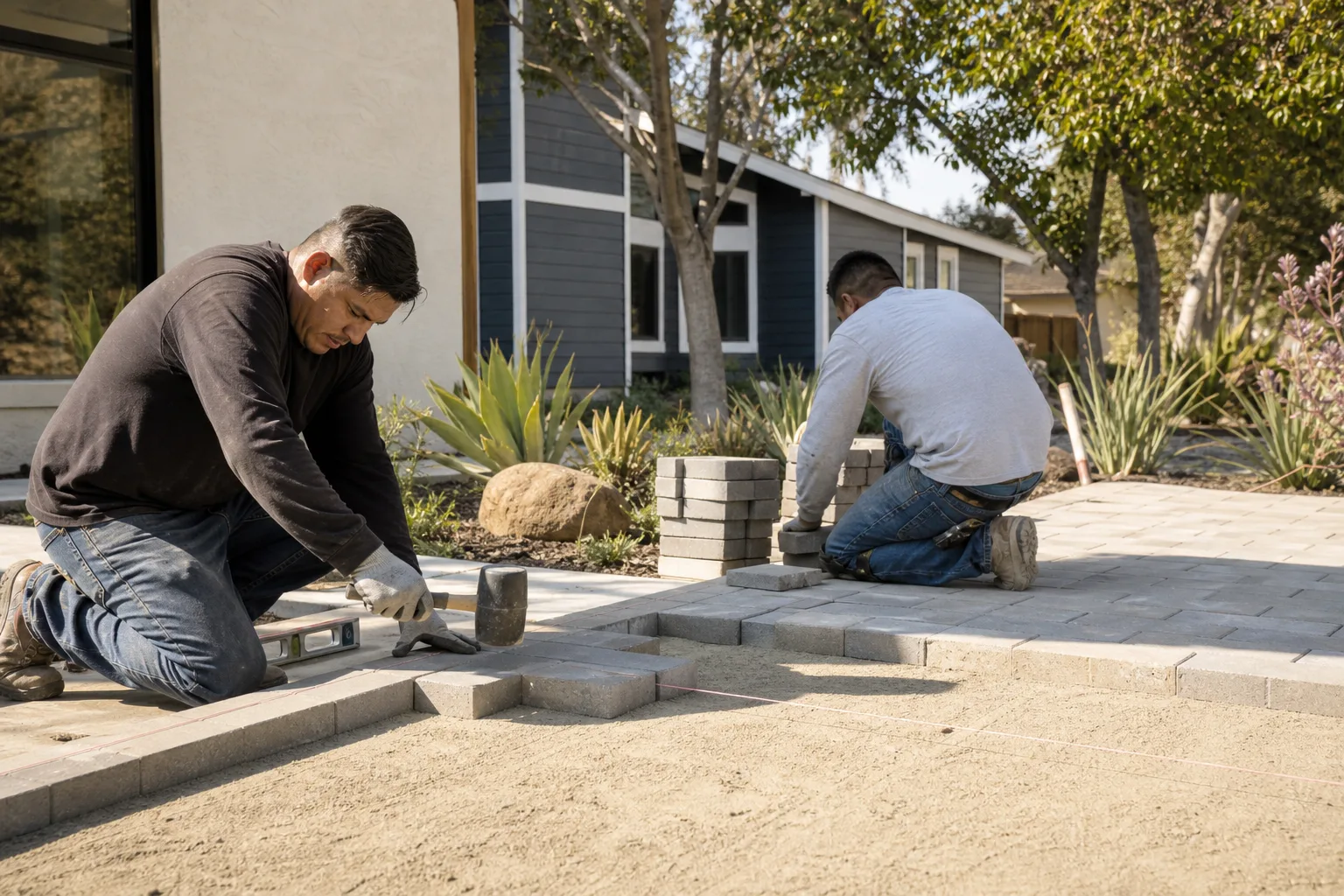
- Base preparation. Install geotextile fabric where specified. Place aggregate in lifts of 2 to 3 inches and compact each lift with a plate compactor or roller. Verify depth and compaction before any pavers go down. This is the stage the whole job depends on.
- Drainage installation. Install channel drains, dry wells, or underdrain as specified. Verify water flows the intended direction.
- Paver installation. Set the edge restraint. Lay pavers in the specified pattern, cut edges to fit, and compact the surface. Install joint sand, polymeric sand, or the specified joint material.
- Final inspection and cleanup. Complete any required city inspection. Clean up the site and haul away leftover material.
Alongside the driveway, the same exterior scope often includes work on the rest of the property. If you’re planning an addition or an ADU that changes how cars enter the lot, the driveway project needs to coordinate with the new footprint. Construction El Monte handles home additions & ADU work with prefab options from Cover, Dvele, and Mighty Buildings alongside conventional site-built construction, so the driveway, access, and building footprint can be planned together instead of in separate phases.
Our technicians have up to 13 years of experience on exterior projects, which shows up most in the base preparation stage. That’s where the difference between a driveway that lasts 20 years and one that fails in five gets made. The paver brand and color matter less than whether the base under them was built for the soil it’s sitting on. If you’re also planning a kitchen or bath alongside the exterior work, the same one-team approach applies, and the full scope is at Construction El Monte.
Common Mistakes to Avoid
- Building a shallow base over expansive clay. A 4-inch base might work on stable hillside soil, but on El Monte’s clay it’s a recipe for settling and cracking. The base depth needs to match the soil, not a generic spec sheet.
- Skipping compaction in lifts. Dumping all the aggregate at once and smoothing it isn’t compaction. Each lift needs to be compacted before the next one goes down, or the whole base settles over time.
- Ignoring drainage before installation. Water has to leave the lot in a planned direction. Retrofitting drainage after the pavers are in costs more and means tearing out part of the surface.
- Choosing a patio paver for a driveway. The color and shape might match your house, but a paver rated for foot traffic isn’t rated for vehicle loads. Check the PSI rating before ordering.
- Forgetting the permit on a footprint change. A new driveway or widened approach almost always needs a permit and inspection. Skipping it can create a problem at resale and complicate the inspection process later.
- Overlooking the tree roots. Mature trees in El Monte lots push roots under driveways, and their movement with the clay lifts pavers. Remove roots that will interfere, or design the base to tolerate the movement.
- Assuming freeze-thaw ratings matter here. They don’t. El Monte’s mild winters mean freeze-thaw behavior is irrelevant. Look at PSI, UV stability, and water absorption instead.
See the difference
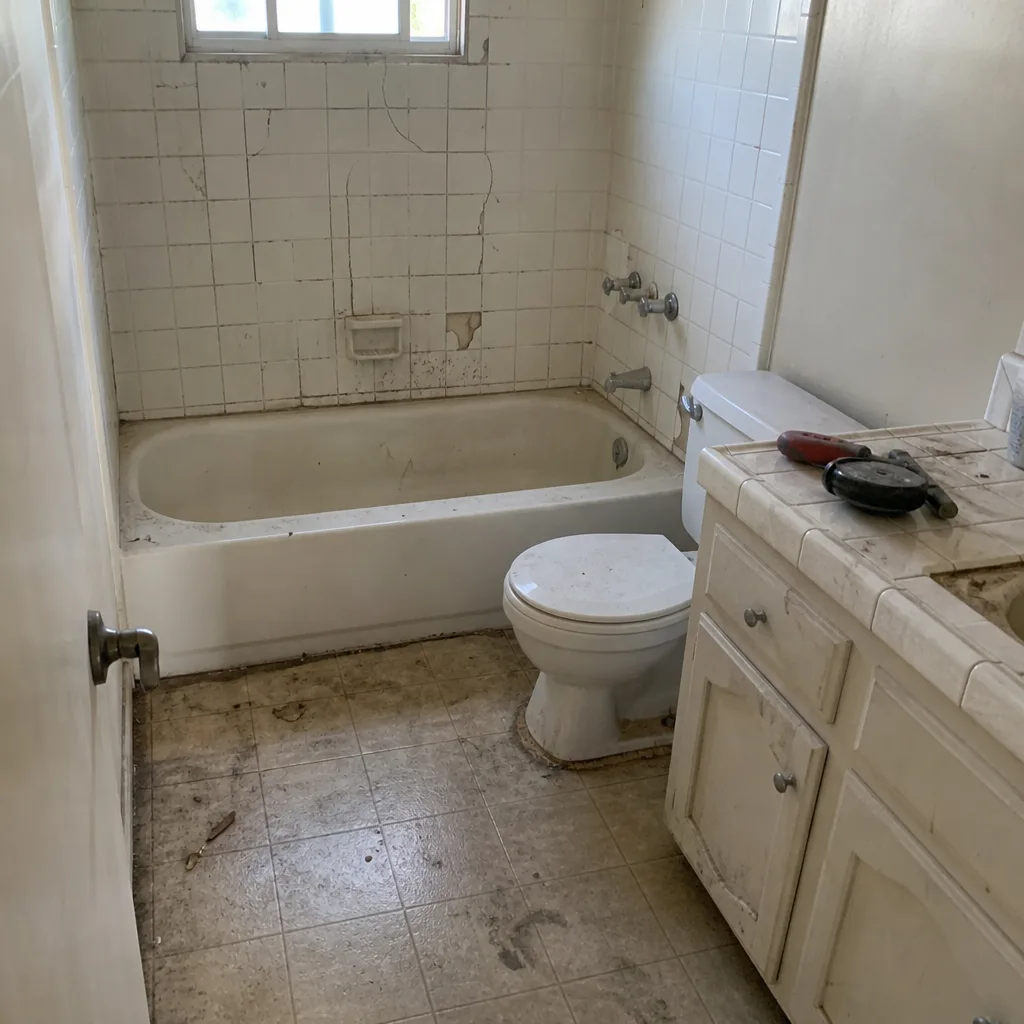 Before
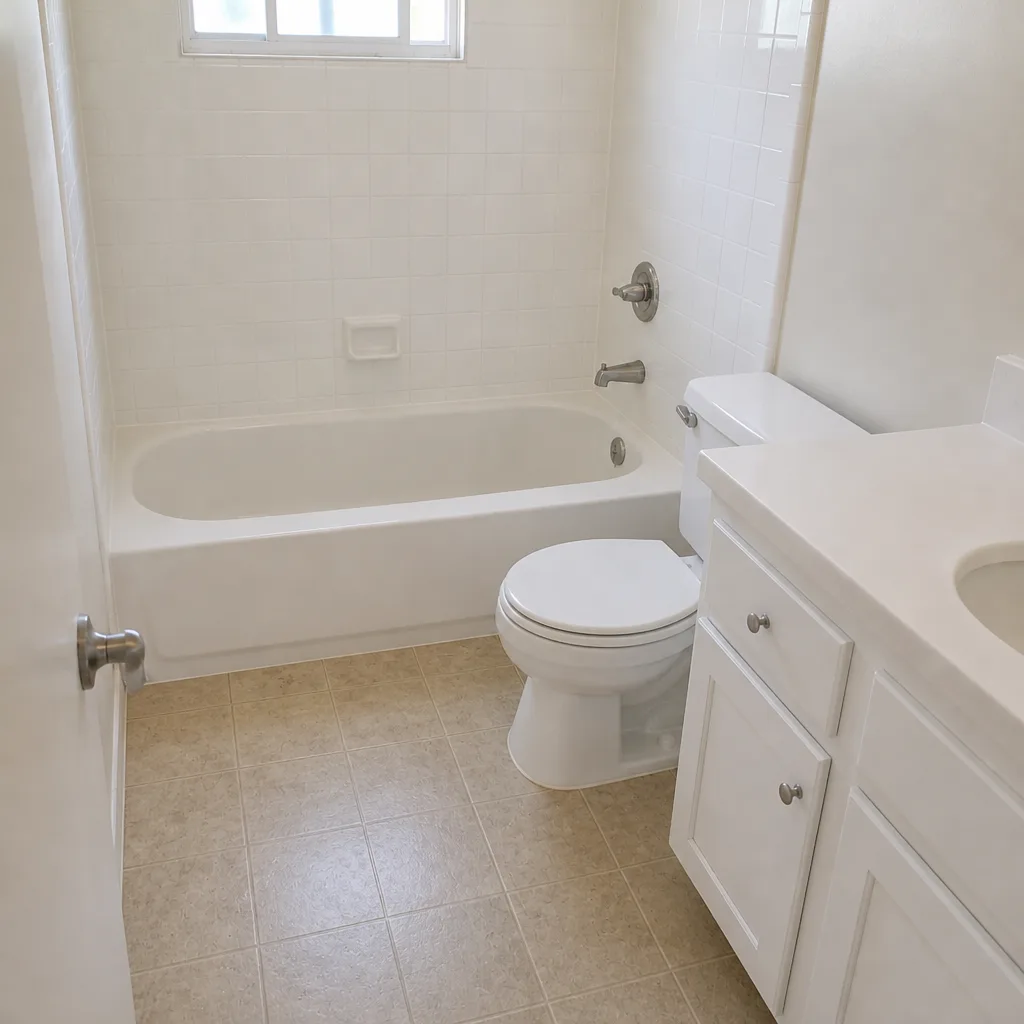 After
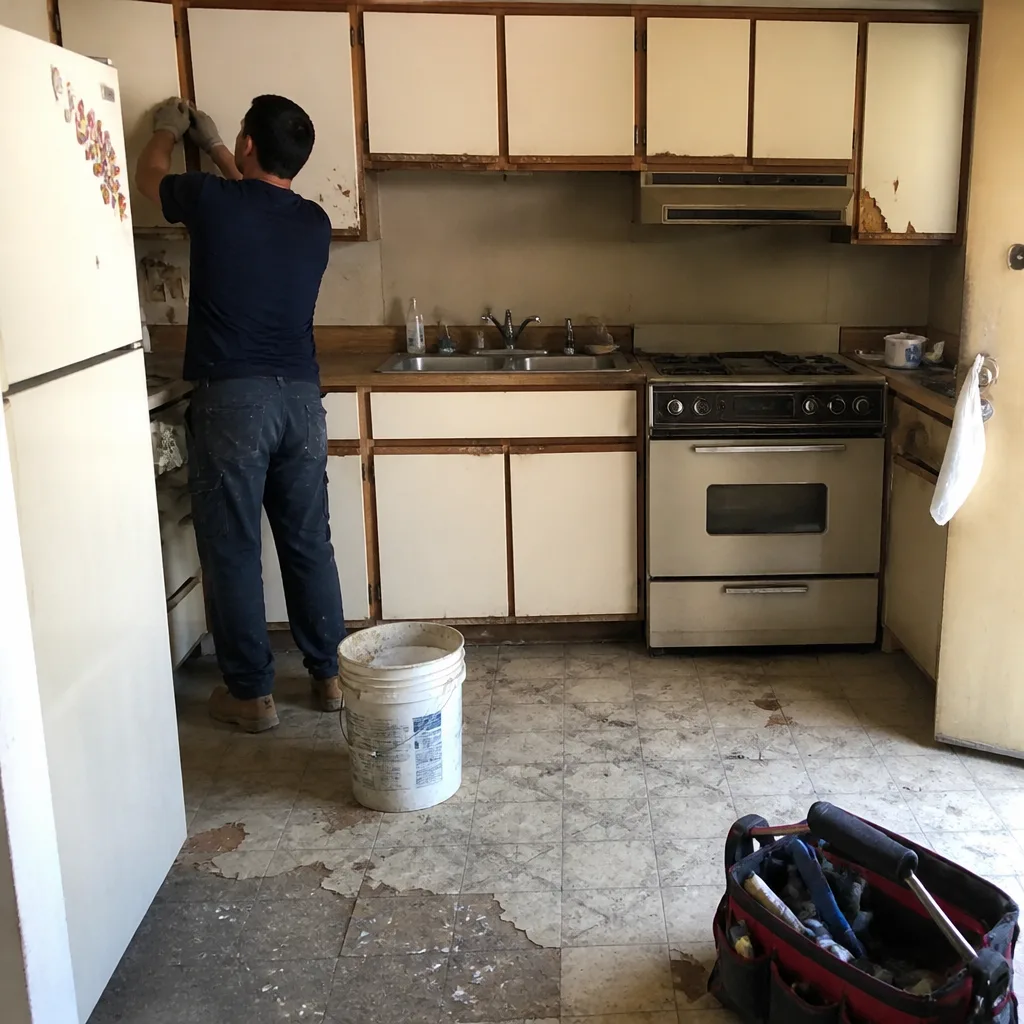 Before
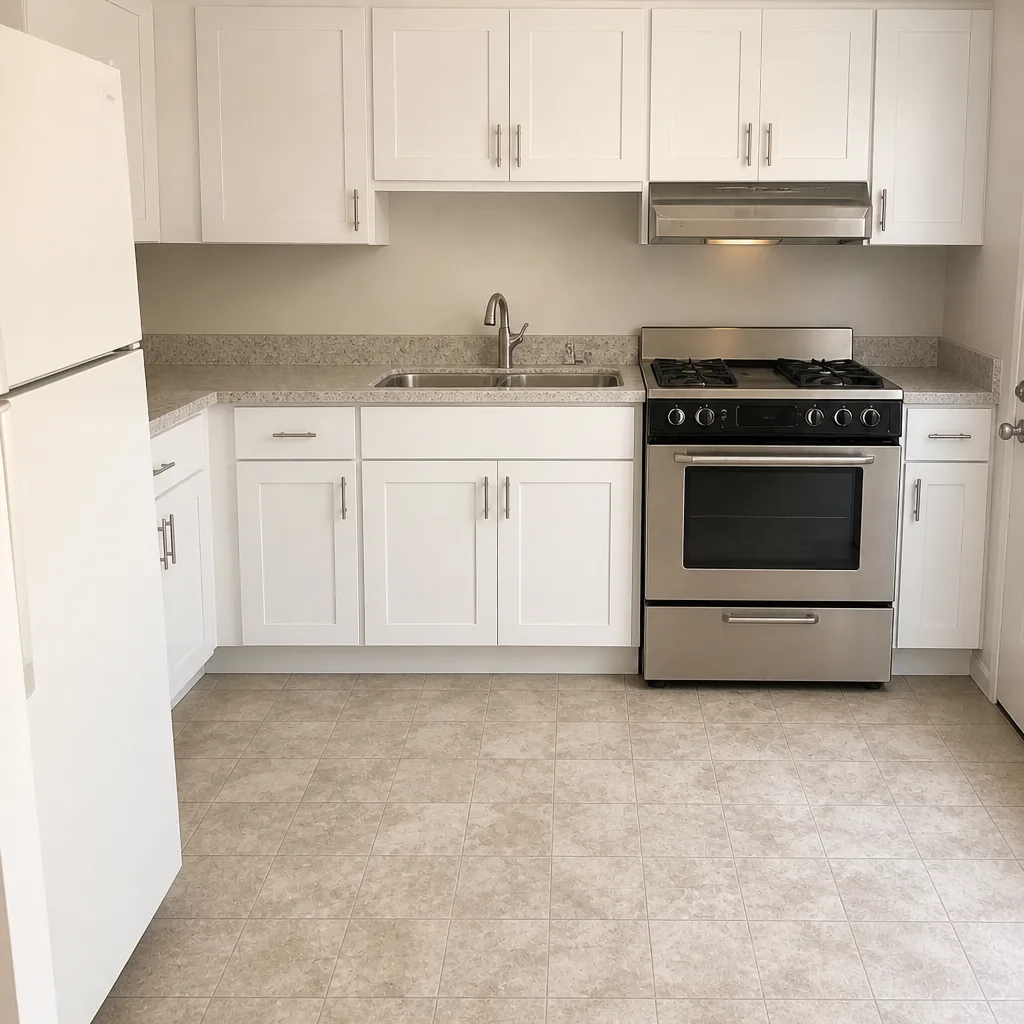 After
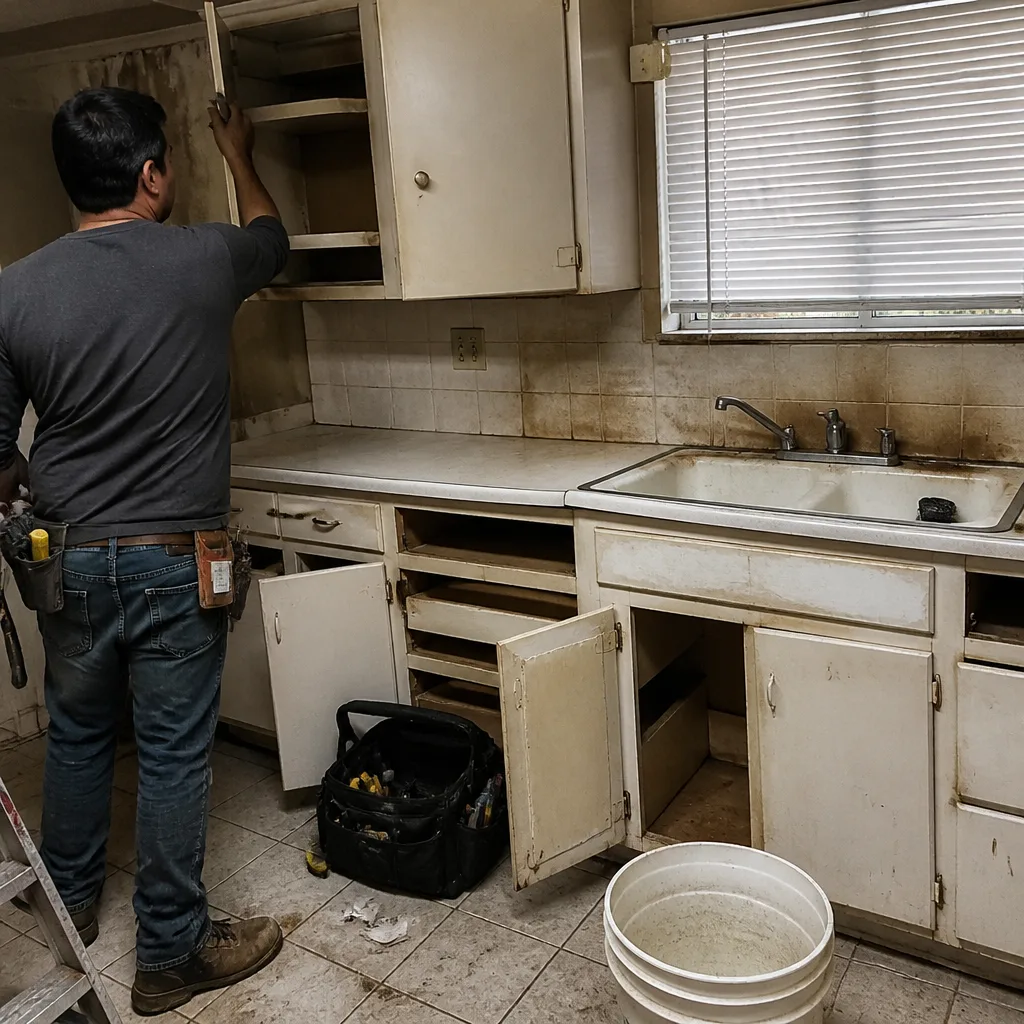 Before
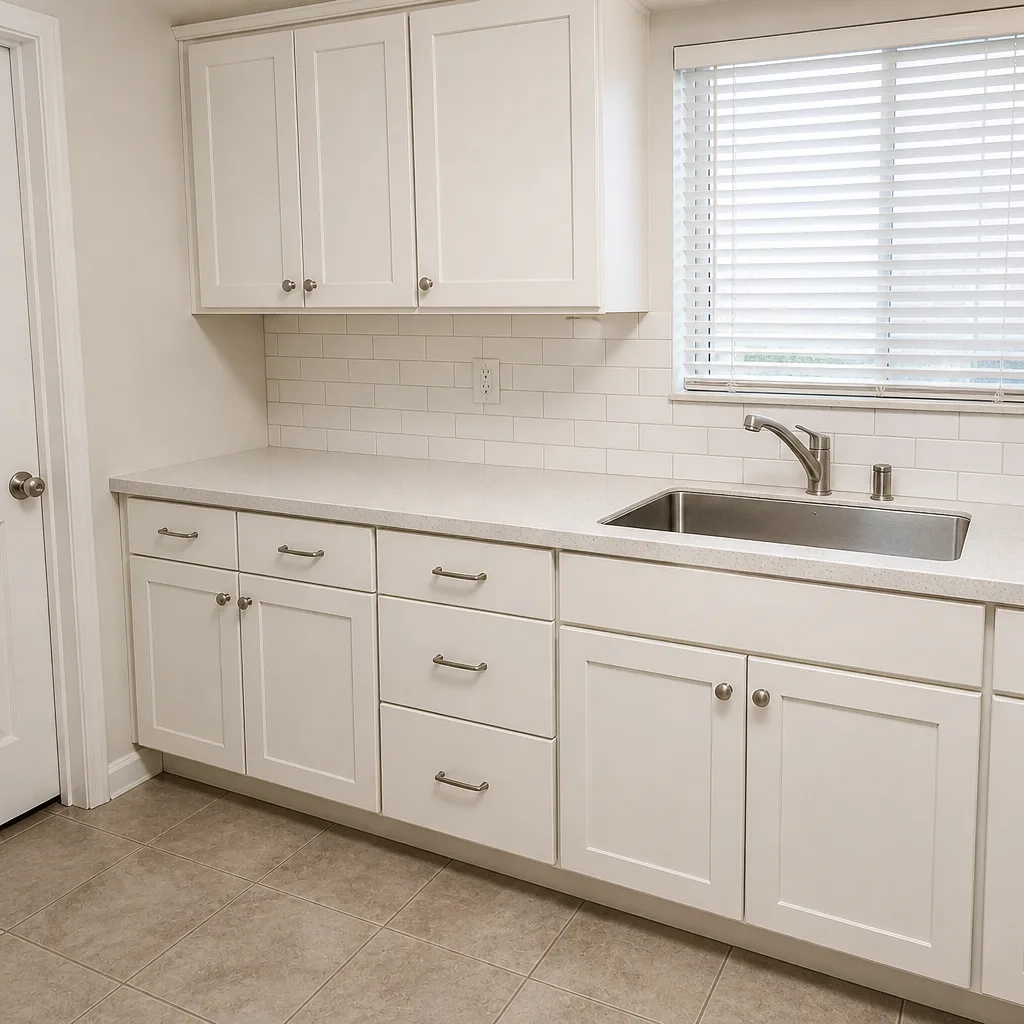 After
When to Call a Professional
Call a professional when the driveway is failing in multiple places, when the base under the existing surface is unknown, or when the project involves a footprint change, a widening, or any work that touches the street apron. Those situations need excavation, base depth judgment, and permit knowledge that are risky to guess at. If the driveway is pooling water after rain, that’s a drainage problem – and it usually means the base or grade needs correcting, not just a fresh surface on top. If you’re comparing your options between pavers, concrete, and asphalt, a professional assessment of the soil and drainage is worth having before you commit to a material. Construction El Monte offers free estimates in El Monte – call (844) 320-2624. We answer 24/7. Fast dispatch from 7am to 7pm, Sunday through Friday. The estimate is free, the price is set by the written estimate, and there are no change orders.
Frequently Asked Questions
A paver driveway in El Monte typically costs $12 to $30 per square foot installed, with the wide range driven by base depth and material choice. Concrete pavers land at the lower end, natural stone at the higher end, and permeable systems somewhere in between depending on drainage design. The written estimate sets the final price. Call (844) 320-2624 for an exact quote – estimates are free.
If you’re replacing pavers or concrete in the same footprint with the same elevation and drainage, a permit is often not required. If the project changes the footprint, widens the approach, or touches the street apron, El Monte Building & Safety generally requires a permit and plan check. Call the city to confirm the exact rule for your property. Call (844) 320-2624 to talk through your project scope – estimates are free.
Over the expansive clay common to El Monte lots, a paver driveway base typically needs 8 to 12 inches of compacted aggregate, built in lifts of 2 to 3 inches and compacted between each layer. Sandy or mixed soils may need less, and a geotextile fabric can help where clay movement is a concern. Call (844) 320-2624 for a project-specific answer – estimates are free.
Permeable pavers can work well where drainage is the main problem, but only if the base is designed for water storage and the soil underneath can accept it. On tight clay without an underdrain, a permeable system just holds water below the surface, which is worse than allowing runoff. Call (844) 320-2624 to talk through drainage options for your lot – estimates are free.
In El Monte, the usual cause is an inadequately compacted base or a base depth that doesn’t match the clay soil beneath it. Clay moves with the seasons, and a shallow or uncompacted base lets the pavers ride that movement until joints open or pavers rock. Drainage problems and tree roots can also contribute. Call (844) 320-2624 to assess the cause – estimates are free.
No. El Monte’s mild winters mean freeze-thaw ratings are effectively irrelevant for a driveway here. What matters is compressive strength (PSI), UV stability, and water absorption. A paver with a high PSI and good UV resistance will hold up well in El Monte heat; a paver selected because it passed a freeze-thaw test that has no local application may not. Call (844) 320-2624 to talk through paver specs – estimates are free.
The Bottom Line
The base under your driveway is the project. El Monte’s clay soil and its dry summers and wet winters move more than most paver guides account for, and a shallow or uncompacted base will fail no matter what surface material gets set on top. Get the depth right, compact it in lifts, plan the drainage on flat lots, and check the PSI on any paver before you order it. Freeze-thaw ratings don’t apply here. Permits apply when you change the footprint. And when you’re comparing bids, look at the base and drainage lines before you look at the price at the bottom, because that’s where a low bid is saving money and where the difference between a 20-year driveway and a 5-year driveway gets made.
Call (844) 320-2624 for a free estimate. We answer 24/7. Fast dispatch from 7am to 7pm, Sunday through Friday. One contractor, every project from the driveway to the roofline, with brand-name materials and published warranties.
Written by the team at Construction El Monte.