Last updated November 18, 2026







Free written scope consultation - allowances, timeline, and change-order rules on paper before a single trade is scheduled
Construction Warning Signs: An El Monte Homeowner’s Reference Guide
Stair-step cracks in brick or block, the kind that follow the mortar joints diagonally, are almost always a foundation or soil settlement issue in El Monte’s expansive clay soil conditions, not a cosmetic problem. Most homeowners patch them with caulk and move on. That’s the mistake this guide is built to prevent. El Monte’s housing stock dates largely to the decades before 1980, which means many of the warning signs we get called out to inspect get waved off as “normal old house stuff.” Some of it is. Some of it means the structure is telling you something. We’ll walk through how to tell the difference, from roof to slab, inside and out.
Quick Answer
The most serious construction warning signs in an El Monte home are diagonal or stair-step cracks in brick, block, or stucco wider than about 1/8 inch, doors and windows that suddenly stick, efflorescence on block walls near driveways or planters, and curling or granule loss on aged composition shingles. Cosmetic cracks are typically hairline, vertical, and stable. The critical ones move, widen, and show up alongside other symptoms. When in doubt, get a professional opinion before patching.
Styles & brands we work with
- Kitchen remodeling
- Bathroom remodeling
- Home additions & ADU
- Roofing
- Windows & doors
- Driveway & pavers
- Fence
Table of Contents
- Cosmetic Stucco Cracking vs. Structural Warning Cracks
- What El Monte’s Clay Soil Does to Slab Foundations
- Interior Warning Signs You Notice Before Exterior Cracks
- Roof Warning Signs on 1960s – 1980s El Monte Homes
- Efflorescence on Block Walls: A Drainage Warning
- Contractor Red Flags During the Job, Not Just During Hiring
- A Step-by-Step Homeowner Inspection Checklist
- When It’s Time to Call a Professional
Cosmetic Stucco Cracking vs. Structural Warning Cracks
Stucco cracks. That’s what stucco does in a climate that swings from dry summer heat to winter rain, and a hairline crack on a stucco wall in El Monte is usually just the finish doing its job. The question that matters is width, direction, and whether the crack is moving. Here’s how we separate the two.
Cosmetic cracks are typically hairline (under 1/16 inch), vertical or spiderweb-patterned, and they don’t change width season to season. They’re the surface layer responding to temperature and moisture. Patching them is fine.
Warning cracks look different:
- Width: 1/8 inch or wider is the line where we start paying attention. A crack you can slide a nickel into is a call-a-professional crack.
- Direction: Diagonal cracks that run from the corner of a window or door toward the ceiling or floor line are a classic sign of shear wall or foundation movement. Stair-step patterns in brick or block are the same warning in a different material.
- Movement: A crack that was 1/16 inch last year and is 3/16 inch now is active. That’s the one that matters.
- Pattern: Cracks radiating from the corners of openings or running in a consistent diagonal across a whole wall point to structural rather than surface causes.
Stucco over a wood-frame wall and stucco over masonry behave differently, and the diagnosis follows the substrate. In El Monte, the mix of mid-century wood-frame homes with stucco skins and older masonry block construction means a single street can have both kinds of walls. When you see a stair-step crack in block, don’t caulk it and hope. Get it looked at.
What El Monte’s Clay Soil Does to Slab Foundations
El Monte sits on expansive clay soil, and that’s the single biggest driver of foundation movement in the city. Expansive clay swells when it takes on water and shrinks when it dries. Over decades, that cycle pushes and pulls on a slab foundation from below. The slab doesn’t fail all at once. It moves slowly, and the house above it tells you about it in stages.
Here’s what that cycle does over time:
- Wet season: Clay beneath and around the slab absorbs water and expands, lifting portions of the slab.
- Dry season: The same clay shrinks and pulls away, dropping those portions back down. Often unevenly.
- Repeat: Decades of this cycle create differential movement, where one part of the slab settles more than another.
- Result: Cracks in the slab, cracks in the walls above, and doors and windows that no longer sit square in their frames.
Drainage matters enormously here. Roof downspouts that dump water at the foundation, planters built tight against the wall, and slabs that slope toward the house all accelerate the cycle. So does the reverse: a foundation that dries out excessively on one side because of a hot exposed wall and no irrigation. The goal is even moisture, not bone dry.
If you’re planning a home additions & ADU project on an older El Monte slab, foundation condition gets evaluated before anything is designed. Adding load to a slab that’s already moving is how small problems turn into big ones. Prefab options from Abodu, Cover, or Dvele can reduce site work in some cases, but the ground under them still has to be right.
Interior Warning Signs You Notice Before Exterior Cracks
The inside of an El Monte home usually tells you about foundation movement before the exterior stucco does. That’s because the interior finishes are tighter and less forgiving. Drywall cracks at the corners of door frames and window openings, and doors that used to close cleanly now catch on the strike plate. Those are the early signals.
Watch for these interior signs:
- Doors that stick or swing open on their own. A door that suddenly won’t latch is telling you the frame is out of square.
- Windows that bind. If a window you’ve opened every summer for years now sticks in the frame, the wall around it has moved.
- Diagonal drywall cracks at openings. A crack running from the top corner of a door frame diagonally up toward the ceiling is a shear or settlement indicator.
- Cracks where the wall meets the ceiling. Separation along that line, especially if it’s wider at one end than the other, points to movement.
- Sloping floors. A marble that rolls across the kitchen on its own is worth a closer look.
- Gaps at baseboards or crown molding. New gaps where there were none, or gaps that open and close seasonally, indicate the structure is moving.
None of these alone is a crisis. Two or three together, especially with exterior stair-step cracks, is a pattern. In our experience, homeowners in El Monte often notice the door-sticking first and the wall crack second, and by then the movement has been going on for a while.
Roof Warning Signs on 1960s – 1980s El Monte Homes
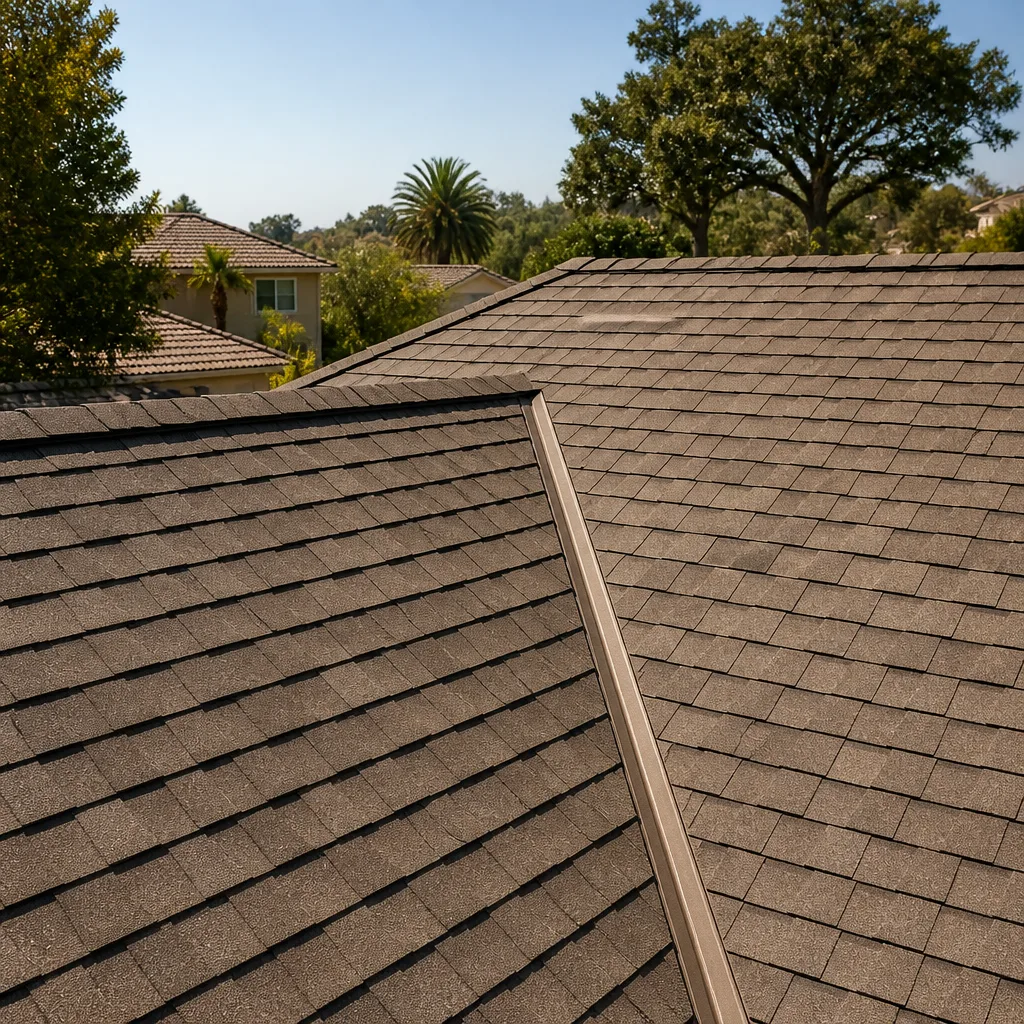
Much of El Monte’s housing was built between the 1960s and the 1980s, and the roofs on those homes are a mix of composition shingle and flat built-up roofing. Each type fails in ways you can spot from the ground or a ladder, and each has its own warning signs.
Composition Shingle Roofs
An asphalt composition shingle roof has a service life, and it tells you when it’s near the end:
- Curling and clawing. Shingle edges that curl up or cup are past their useful life. This happens faster on south- and west-facing slopes in El Monte’s summer sun.
- Granule loss. Granules in the gutters or piled at the bottom of downspouts mean the shingle surface is breaking down. Bald patches on the shingles themselves are a later stage.
- Missing or lifted shingles. After a windy storm, missing tabs are a sign the shingle field is losing its seal.
- Sagging roof lines. A dip in the roof plane suggests sheathing or framing issues underneath, not just a worn surface.
Flat Built-Up Roofs
Low-slope and flat roofs on mid-century El Monte homes are prone to ponding water, blisters, and seam failures. Watch for standing water hours after rain ends, soft spots you can feel when walking the roof, and cracking at the flashing where the roof meets a wall or parapet. Blisters and alligatoring on the surface membrane are signs the coating or cap sheet is failing.
When a roof is replaced, the shingle brand and the warranty behind it matter. Roofing from GAF, CertainTeed, or Owens Corning comes with published warranties you can read and compare before you sign. That’s the difference between a handshake and a document.
Efflorescence on Block Walls: A Drainage Warning
Efflorescence is that white, chalky powder that shows up on the surface of concrete or block. It’s salt deposits left behind when water moves through the masonry and evaporates. Homeowners often treat it as a cosmetic staining problem, scrub it off, and move on. In El Monte, efflorescence on a block wall near a driveway or planter is usually a drainage warning, not a stain.
Here’s the mechanism. Water gets into the block from somewhere: a planter bed built against the wall, a driveway that slopes toward it, a downspout that discharges at its base, or irrigation that hits it directly. As the water migrates through the block and evaporates from the surface, it carries salts with it. The efflorescence is the visible end of a water path you can’t see.
What to look for:
- Location. Efflorescence concentrated low on the wall or in a band near a planter or driveway edge points to water entering at that level.
- Persistence. Efflorescence that returns after cleaning means the water source is still active. Cleaning is a symptom fix.
- Companion signs. Spalling (flaking) block faces, soft mortar joints, or a white deposit that reappears within weeks all indicate ongoing moisture.
- Drainage check. Where does the water go when it rains? If the answer is “into the planter against the wall,” that’s the problem to correct.
Left alone, efflorescence accompanies freeze-free but still damaging moisture cycles. Mortar joints soften, block faces spall, and a retaining or privacy wall loses structural strength over time. Our fence installation work routinely turns up this kind of hidden moisture damage at wall bases, and the fix starts with redirecting the water, not painting over it.
Contractor Red Flags During the Job, Not Just During Hiring
Most guides tell you how to screen a contractor before you hire. That’s useful, but the warning signs that cost homeowners the most in El Monte show up during the job itself. The hiring red flags (no written contract, no license, pressure to pay cash up front) are well documented. The in-progress red flags are less talked about and more revealing.
Watch for these during construction:
- Problems getting covered instead of fixed. If a crew discovers rot, water damage, or a framing issue and the response is to drywall over it or paint it without showing you, that’s a red flag. A legitimate contractor stops, shows you the problem, and gives you a written change order before proceeding.
- No change orders, ever. Scope changes happen. A contractor who never documents them in writing is setting up a dispute at final payment.
- Surface prep skipped. Paint over a dirty wall, tile set on an unprepared substrate, or pavers laid without proper base compaction all look fine on day one and fail within a couple of seasons. Prep is where corners get cut.
- No permits and no inspections. Structural, electrical, plumbing, and additions work generally require permits, and most cities require them. Ask your city’s building department what applies to your project. A contractor who suggests skipping the permit is telling you something about how the rest of the job will go.
- Communication goes quiet. If you can’t reach the contractor during the project, that’s a warning about what happens after the final payment.
- Rushing the closeout. Punch lists exist for a reason. A crew that won’t come back to fix the small stuff is telling you how they’ll handle a warranty call.
None of this is about catching people out. It’s about knowing what a well-run job looks like. In our experience, the contractor who documents, permits, and inspects is the one who’s still around when you have a question six months later.
A Step-by-Step Homeowner Inspection Checklist
You can walk your own home twice a year and catch most of these early. Do it in the fall before the rainy season and again in the spring. A flashlight, a notebook, and about forty-five minutes is all you need.
- Walk the exterior and look at the stucco. Note any crack wider than 1/8 inch, any diagonal or stair-step crack, and any crack that’s changed since last time. Measure with a ruler and write it down.
- Check the corners of every window and door from outside. Diagonal cracks radiating from openings are the ones to watch.
- Look at the block walls near the driveway and planters. White powder, flaking faces, or soft mortar joints mean moisture is getting in.
- Check the drainage. Downspouts should discharge away from the foundation, and the soil should slope away from the house, not toward it.
- Inside, open and close every door and window. Note anything that sticks, catches, or won’t latch. Compare to how they worked a year ago.
- Look at the ceiling and wall joints. Gaps or cracks where the wall meets the ceiling, especially diagonal ones, are movement indicators.
- From the ground, look up at the roof. Note curling shingles, missing tabs, sagging lines, or water staining on the fascia. Check the gutters for granules.
- Write it all down and date it. The pattern over time is what tells you whether a crack is stable or active. A notebook from two years ago is worth more than a memory.
If you find something that makes you uneasy, take photos and note the date. A professional opinion early costs far less than a repair after a problem has been growing for a decade. And if your walk turns up exterior work that needs doing, a driveway & pavers assessment is a good place to start on the flatwork side.
See the difference
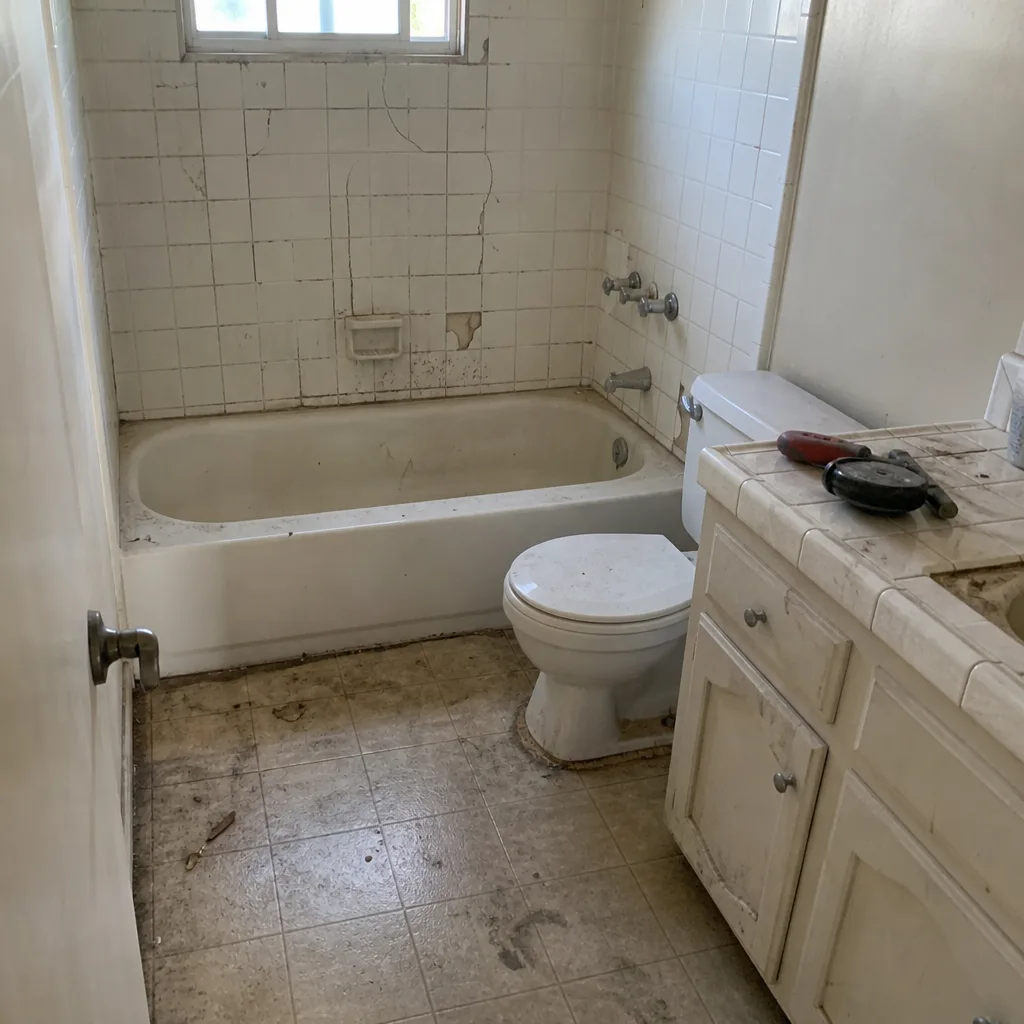 Before
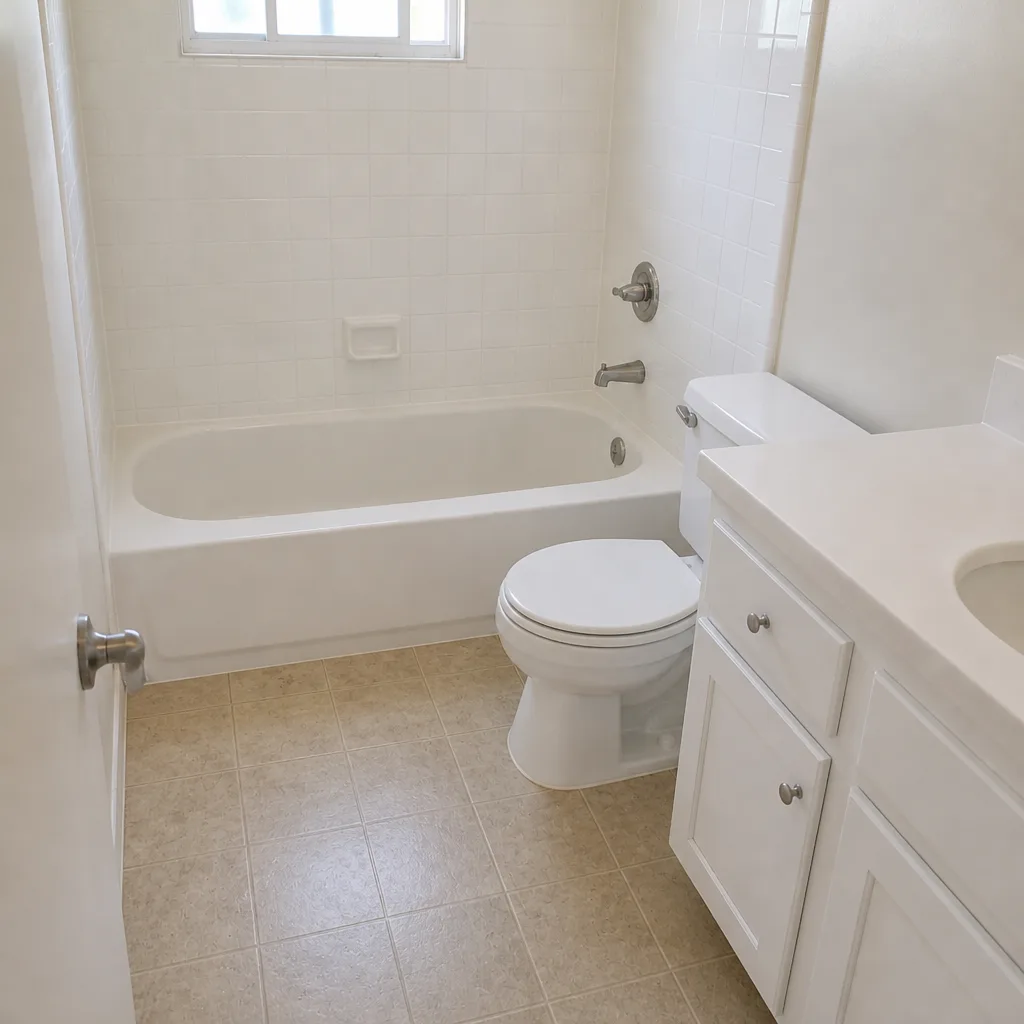 After
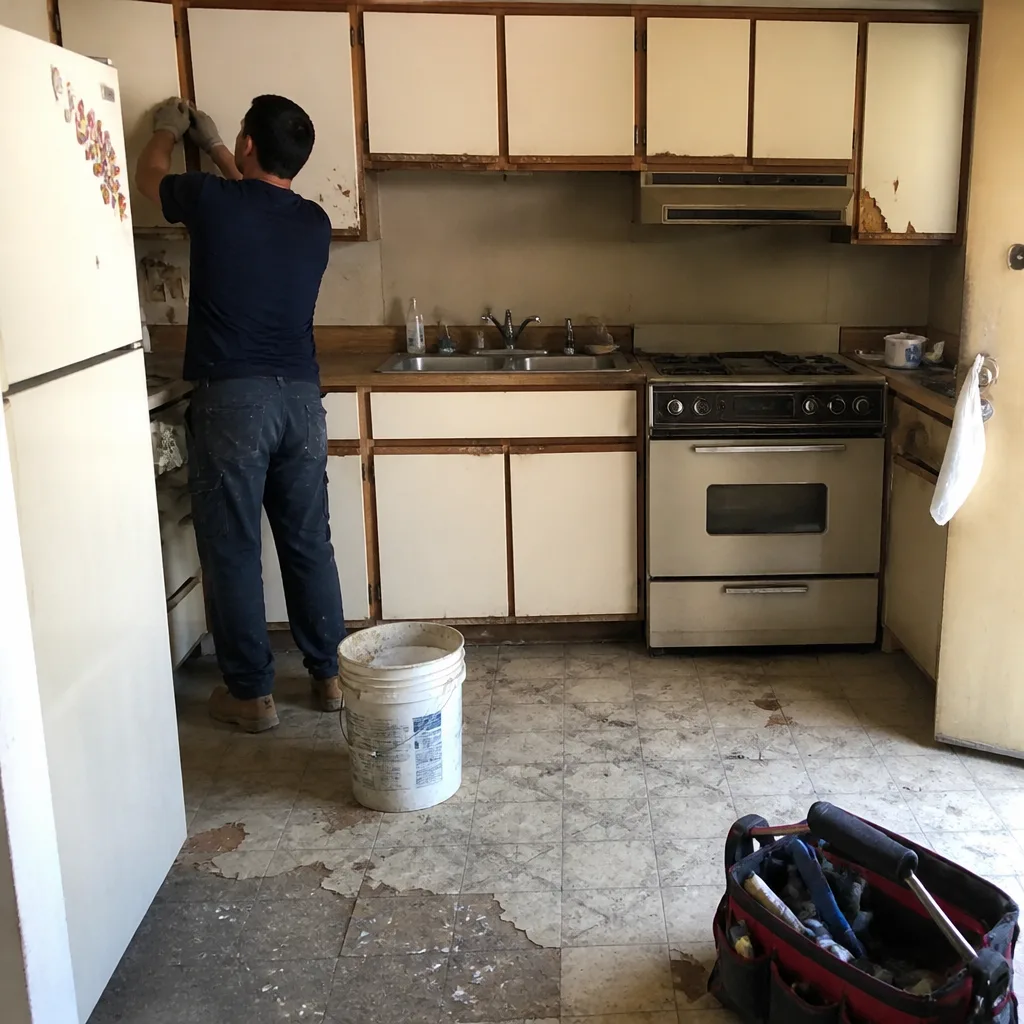 Before
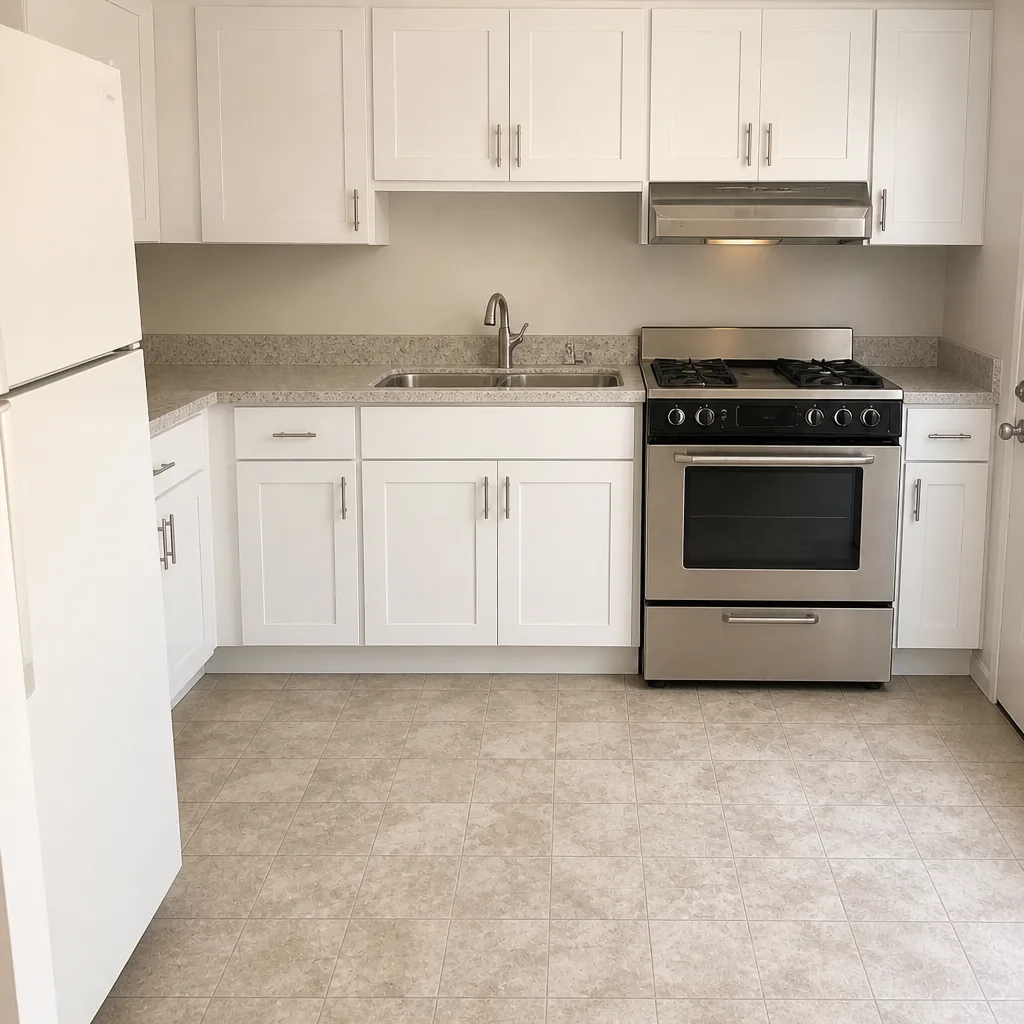 After
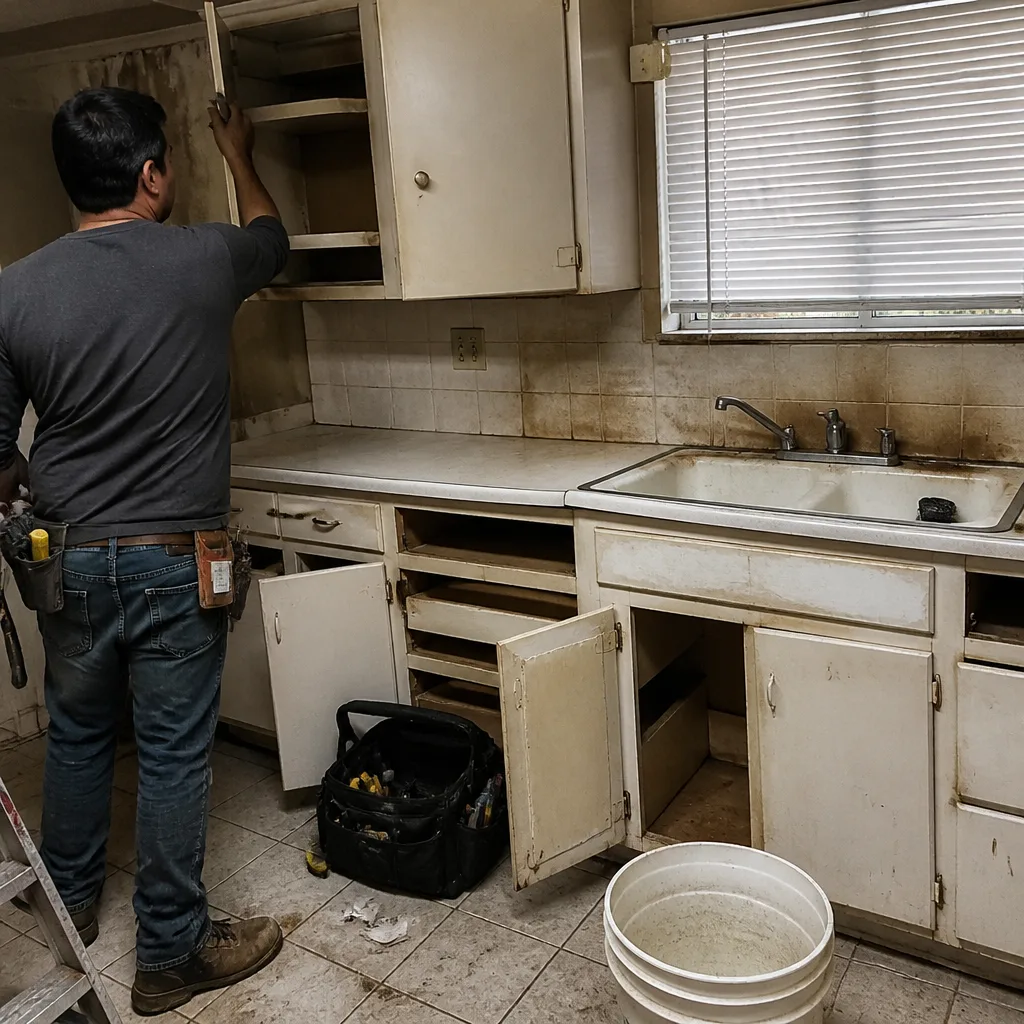 Before
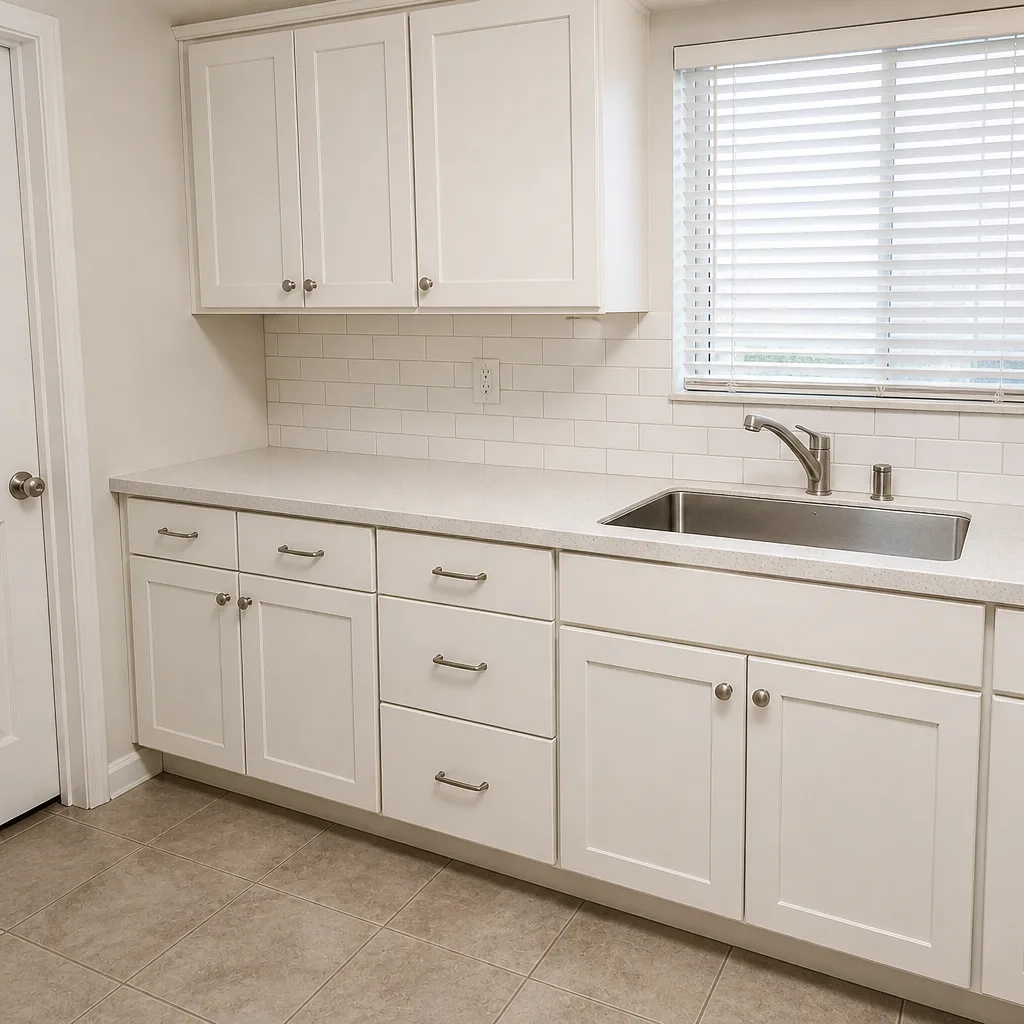 After
Common Mistakes to Avoid

- Caulking a stair-step crack. Caulk hides the symptom and makes it harder to track whether the crack is active. Measure and monitor instead, and get it looked at if it’s 1/8 inch or wider.
- Treating efflorescence as a cleaning problem. Scrubbing the white powder off a block wall without finding the water source guarantees it comes back. Fix the drainage first.
- Ignoring the interior signs because the exterior looks fine. Doors that stick and windows that bind are often the first signals of foundation movement in El Monte, and they show up long before the stucco cracks.
- Replacing a roof over a failing underlayment or decking. The shingle is only as good as what’s under it. A roof replacement that skips decking inspection and new underlayment is a warranty problem waiting to happen.
- Assuming permits are optional for small additions. Most El Monte-area additions and ADUs require permits and inspections. Skipping them creates title and sale problems later. Ask the city’s building department what applies.
- Hiring on price alone. The lowest bid is often the one that skips prep, permits, and inspections. Compare scope, materials, and warranty, not just the number on the page.
- Not writing down what you find. A dated photo and a notebook entry turn a vague “the crack looks bigger” into a fact you can act on.
When to Call a Professional
Call a professional when a stair-step or diagonal crack in brick, block, or stucco measures 1/8 inch or wider; when multiple interior signs (doors sticking, windows binding, diagonal drywall cracks) show up together; when efflorescence returns after cleaning; when a roof shows curling shingles, missing tabs, or a sagging line; or when you’re planning an addition or ADU and aren’t sure the foundation can take the load. Those are the situations where an on-site look is worth more than another year of watching.
Some things are safe to inspect and patch yourself. Structural cracks, water paths behind masonry, and roofs that are past their service life are not. Construction El Monte offers free estimates in El Monte, and our technicians have up to 13 years of experience. Call (844) 320-2624. We answer 24/7. Fast dispatch from 7am to 7pm, Sunday through Friday, and we’re closed on Saturday.
Frequently Asked Questions
About 1/8 inch is the line where a crack moves from cosmetic to worth inspecting. Hairline cracks under 1/16 inch that are vertical and stable are usually surface finish. Diagonal or stair-step cracks at or above 1/8 inch, especially ones that are widening or radiating from window and door corners, should be evaluated by a professional. Call (844) 320-2624 for an exact quote on an inspection, and estimates are free.
Efflorescence itself is harmless salt deposit, but it’s a reliable sign that water is moving through the masonry, which over time softens mortar and spalls block faces. The danger is the hidden moisture path, not the white powder. If it returns after cleaning, the water source needs to be found and redirected. Call (844) 320-2624 for an assessment, and estimates are free.
Seasonal sticking can indicate the structure is moving with moisture cycles in expansive clay soil. In El Monte, doors that bind in summer and free up in winter are showing you that the soil around the foundation is shrinking and swelling. If the sticking is getting worse year over year, or comes with wall cracks, get it inspected.
Curling or clawing shingle edges, granules in the gutters, bald patches, and missing tabs after wind are the standard signs a composition roof is near the end of its service life. On flat built-up roofs, look for ponding water, blisters, and seam failures. When a replacement is warranted, roofing from GAF, CertainTeed, or Owens Corning carries published warranties you can compare before you commit. Call (844) 320-2624 to schedule a free roof assessment.
Most additions and accessory dwelling units require permits and inspections, though the exact rules depend on your project and your city. Ask your city’s building department what applies to your specific scope before any work starts. A contractor who suggests skipping the permit is a red flag. Our home additions & ADU work covers both site-built and prefab options, and every project is permitted and inspected. Call (844) 320-2624 for a free estimate.
Not without a written change order you approve first. Hidden conditions (rot, water damage, framing issues) sometimes turn up once walls are opened, and the right response is to stop, show you the problem, and document the change in writing before proceeding. A written estimate with fixed pricing and no surprise change orders is how a job should run. Call (844) 320-2624 for a line-item quote on your project.
The Bottom Line

The warning signs that matter most in an El Monte home aren’t the ones that look dramatic. They’re the ones that look normal: a crack you can caulk, white powder on a block wall, a door that sticks in summer, a roof with a few curled shingles. In a city where expansive clay soil and pre-1980 housing stock meet, those small signals often point to something bigger underneath. The fix is to measure, monitor, and get a professional opinion before you patch. That’s how small problems stay small, and how a serious investment in your home stays on track. Construction El Monte builds across seven trade categories, from the driveway to the roofline, using brand-name materials with published warranties: GAF, CertainTeed, and Owens Corning roofing, Belgard and Techo-Bloc hardscape, KraftMaid and Wellborn cabinetry, Cambria and Silestone countertops, and Kohler, Toto, and American Standard fixtures. One accountable team, from the first inspection to the final walkthrough. With brands like American Standard, Toto, and Schluter in the bath and kitchen lineup, you can verify every material before you sign. Call (844) 320-2624 for a free estimate. Explore our full range of Construction El Monte services to see how one contractor across seven trades changes a project.
Written by the team at Construction El Monte.